A Beginner's Kitchen Checklist
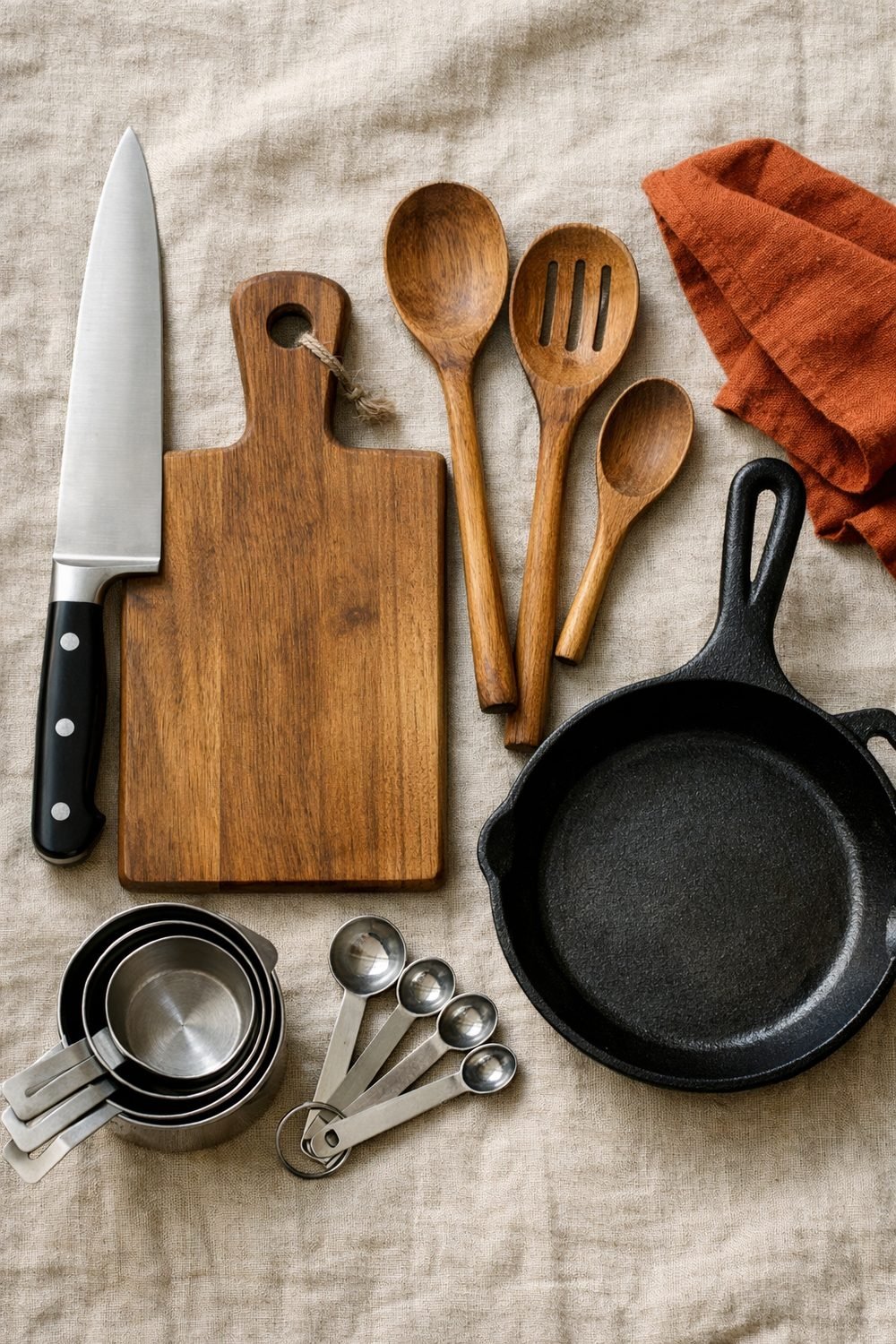
When you move into your first apartment, it's tempting to buy a 15-piece knife block, a bread maker, and a pan set so heavy you can barely lift it, but a simple beginner kitchen checklist will save you money and cabinet space. Two years later, I was using maybe four of those things. The bread maker lived in a closet until I gave it away.
You don't need everything. You need a handful of good basics that you'll actually reach for on a Tuesday night when you're tired and hungry. Here's the kitchen checklist for beginners I wish someone had handed me back then.
Short on time? Our top picks: Victorinox Fibrox Pro Chef's Knife, OXO Good Grips Cutting Boards, Lodge Cast Iron Skillet and Tramontina Nonstick Frying Pan. See all picks
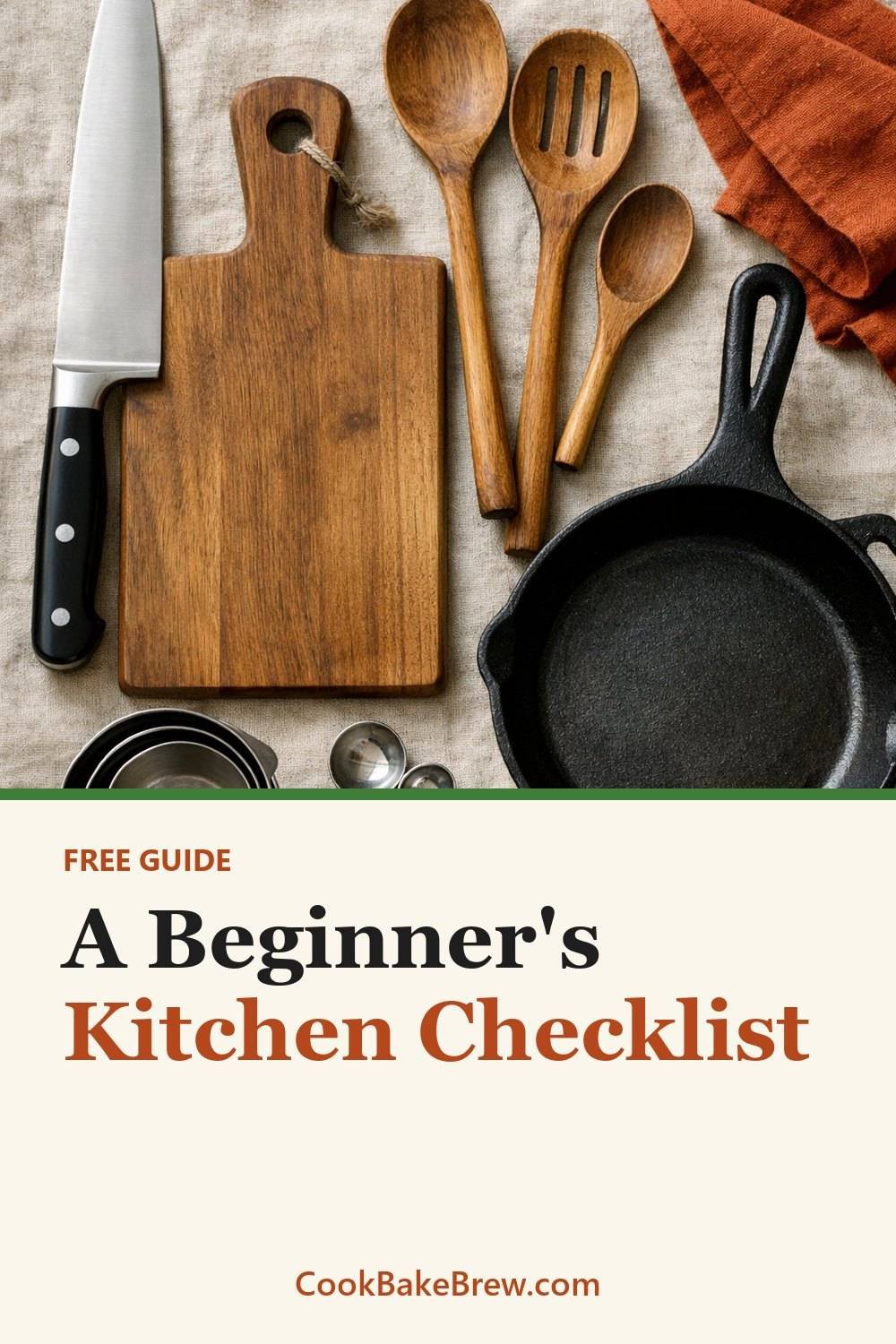
1. One Good Chef's Knife
If you only spend real money on one thing, make it this. A decent chef's knife, such as the Victorinox Fibrox Pro, somewhere around 8 inches, will handle almost every job: chopping onions, slicing chicken, smashing garlic, cutting up a melon. You can skip the giant kitchen knife set with block. Most of those extra knives just sit there.
A sharp knife is actually safer than a dull one. Dull blades slip off tomato skins and onion layers, and that's when fingers get nicked. A sharp one goes where you point it.
Add a small paring knife if you like, for peeling and little jobs. A serrated bread knife is nice too, but honestly, I lived without one for a long time.
Practical tip: Hold a knife before you buy it if you can. It should feel comfortable in your hand, not too heavy and not like a toy. And never toss it loose in a drawer with other utensils. That's how blades get chipped and hands get cut.
2. Two Kitchen Cutting Boards (Not Just One)
Many beginners use one board for everything, but that can cause problems. Then one night I cut raw chicken, rinsed the board quickly, and almost started slicing tomatoes for a salad on it.
Keep one board for raw meat, poultry, and fish. Use the other for veggies, fruit, bread, and anything you'll eat without cooking. It's a simple habit that keeps raw juices away from food that won't get heated.
Plastic boards are easy to clean and can often go in the dishwasher. Wood boards feel lovely and are kind to your knife, but they need hand washing and the occasional rub of oil. Using both is a good habit.
Practical tip: Put a damp paper towel or dish cloth under your board. It stops the board from sliding around on the counter, which makes chopping much calmer.
3. A Few Kitchen Pots and Pans in Different Sizes
The original advice I got was "one of each size," and that still holds up. You don't need a matching set of twelve pieces of kitchen cookware. Here's what I'd start with:
- A medium frying pan (around 10 inches) for eggs, stir-fries, and quesadillas
- A small saucepan for rice, oatmeal, and heating soup
- A large pot for pasta, chili, and big batches of soup
That's it. With those, you can cook most beginner recipes. Later, if you find yourself searing a lot of steak or baking bread, a cast iron skillet (such as one from Lodge) or a Dutch oven is a lovely next step. But they're heavy and they take some care, so I wouldn't rush.
Nonstick is forgiving when you're learning, especially for eggs. Stainless steel lasts longer and handles high heat well, though food sticks more until you get the hang of preheating.
Practical tip: Check that your pots have lids, or that a lid from one fits another. A lid makes water boil faster and lets you simmer things without everything drying out.
4. A Nesting Set of Mixing Bowls
Mixing bowls do far more than mixing. A large bowl is handy for tossing salads, marinating chicken, holding chopped veggies before they hit the pan, and catching peels so you're not walking to the trash every two minutes.
A nesting set is the way to go, and it also works like kitchen storage containers for prepped ingredients. Three or four bowls that stack inside each other take up the space of one. Small kitchens love this.
Stainless steel is light and nearly impossible to break. Glass is nice because you can see what's inside and many can go in the microwave. Check the label on any bowl before you heat it, though.
Practical tip: Get at least one bowl that's bigger than you think you need. Tossing a salad in a too-small bowl means lettuce all over the counter. Ask me how I know.
By the way, if you'd like something easy to cook while you're getting your kitchen set up, my free 3 Soup Recipe Cards are yours when you join the email list.
5. Measuring Cups and Spoons
When you're cooking, you can often eyeball things. A little more garlic won't hurt anybody. Baking is different. Too much flour or baking soda and your muffins turn into hockey pucks.
You'll want a set of dry measuring cups, a liquid measuring cup (the clear kind with a spout and lines on the side), and a set of measuring spoons. Those three cover nearly every recipe you'll find.
If you get into baking, a small kitchen scale is worth a look. Many bakers swear by weighing ingredients. It's a "nice to have" for now, not a must.
Practical tip: For flour, spoon it into the cup and level it off with the back of a knife. Scooping straight from the bag packs it down, and you end up with more than the recipe wants.
6. A Timer and a Meat Thermometer
Your phone works fine as a timer. A cheap little kitchen timer on the fridge can still help, though, because a phone tends to wander off to another room right when the cookies need to come out.
The thermometer is the one I'd really push for. Cutting into chicken to "check" it is guesswork, and I've served my share of dry, overcooked chicken because I was nervous. An instant-read thermometer, like the ThermoWorks Thermapen, takes the worry out of it. For safe cooking temperatures, check a trusted food safety source or the guidance in your recipe.
Thermometers also help with things you might not expect, like checking if oil is hot enough for frying or if bread is baked through.
Practical tip: Push the probe into the thickest part of the meat, and try not to touch bone. Bone heats differently and can give you a reading that's off.
7. A Small Crew of Basic Utensils
This is where people overbuy. You see a cute avocado tool or a garlic press shaped like a hedgehog and suddenly your drawer won't close. You can skip most single-job gadgets.
Here's what earns a spot in my drawer:
- A wooden spoon for stirring sauces and soups
- A flexible spatula (turner) for flipping pancakes and eggs
- A rubber or silicone scraper for getting every bit out of a bowl
- Tongs, which you'll likely reach for more than almost anything else
- A vegetable peeler
- A can opener
- A whisk
If you're using nonstick pans, choose silicone, wood, or nylon tools so you don't scratch the coating.
Practical tip: Keep your most-used tools in a jar right next to the stove. Grabbing tongs with one hand while the other is holding a pan is so much easier than digging through a drawer.
8. A Sheet Pan and a Colander
These two go together because they're both simple, cheap, and you'll use them constantly. A rimmed sheet pan is great for roasting veggies, baking cookies, and making those "toss everything on one pan" dinners that save so much cleanup.
A colander drains pasta, rinses berries, and washes greens. Get one with feet or a sturdy base so it sits in the sink on its own. You don't want to be holding a heavy, steaming pot with one hand and a wobbly colander with the other.
Practical tip: Line your sheet pan with parchment paper when roasting. Cleanup goes from scrubbing to just tossing the paper.
If you like keeping track of things on paper, the Kitchen and Cooking Planner and Checklist Bundle below this post has a kitchen checklist printable like this one, plus a kitchen planner printable for your meals. Some people love checking boxes. Plenty of people feel that way.
Kitchen Basics Worth a Look
Here are some well-known brands that make the kind of simple, useful basics this checklist covers. Think of them as starting points, not a shopping list you have to finish.
Victorinox Fibrox Pro Chef's Knife
A good fit for beginners who want one dependable all-purpose knife without paying for a fancy name. Hold it if you can, and check that the handle and weight feel comfortable in your hand.
OXO Good Grips Cutting Boards
Suits anyone who wants an easy-care plastic board for raw meat and another for produce. Check that the board fits your sink and dishwasher before you buy.
Lodge Cast Iron Skillet
Suits cooks who want a pan for searing and baking that can last for years. It is heavy and needs some care, so make sure you are happy to season and dry it by hand.
Tramontina Nonstick Frying Pan
A friendly choice for learning eggs and quick weeknight meals. Check which utensils are safe for the coating and whether the pan works on your stovetop.
Pyrex Glass Mixing Bowls
Good for people who like seeing what is inside and want bowls that nest to save space. Read the care label before using any bowl in the microwave or oven.
ThermoWorks Thermapen
Suits anyone who wants to stop guessing whether chicken is cooked through. It sits at the higher end of home thermometers, so compare it with simpler instant-read models first.
Nordic Ware Baking Sheets
A solid pick for roasting vegetables and baking cookies. Check the pan size against your oven and your storage space.
Check current plans and prices on each brand's own site before you buy.
FAQ
Should I buy a full kitchen cookware set or separate pieces?
For most beginners, separate pieces make more sense. Sets often include sizes you'll never use. Buying a few pieces you know you need usually means less clutter.
Do I need expensive tools to cook well?
No. A decent knife is worth spending a bit more on, and top rated kitchen knives don't have to be fancy, but most other basics can be simple and inexpensive. Plenty of great home cooks use plain, well-worn tools.
What should I buy first if I'm on a tight budget?
Start with a chef's knife, a cutting board, one frying pan, and one pot. With those, you can make a lot of meals. Add the rest little by little as recipes call for them.
How do I keep my knife sharp?
A honing steel helps keep the edge straight between sharpenings, and a simple sharpener or a local sharpening service can handle the rest. Cutting on a board (never a plate or countertop) helps a lot too.
Your Next Step
Start small. Get the basics, cook a few simple meals, and notice what you keep wishing you had. That's how you build a kitchen that actually fits the way you cook. A great first thing to make? Soup. Grab my free 3 Soup Recipe Cards by joining the email list, and then take a look at the Kitchen and Cooking Planner and Checklist Bundle and The Confident Home Cook Starter Guide below this post if you'd like a bit more help getting started.
Printables and tools that can help
Kitchen and Cooking Planner and Checklist Bundle
A printable bundle with a 30-day goal page, weekly planner and kitchen checklists for home...
See detailsThe Confident Home Cook Starter Guide
A plain-English starter guide for beginners in the kitchen. General information...
See details