Bread Baking Troubleshooting Log: Dough, Oven and Pans
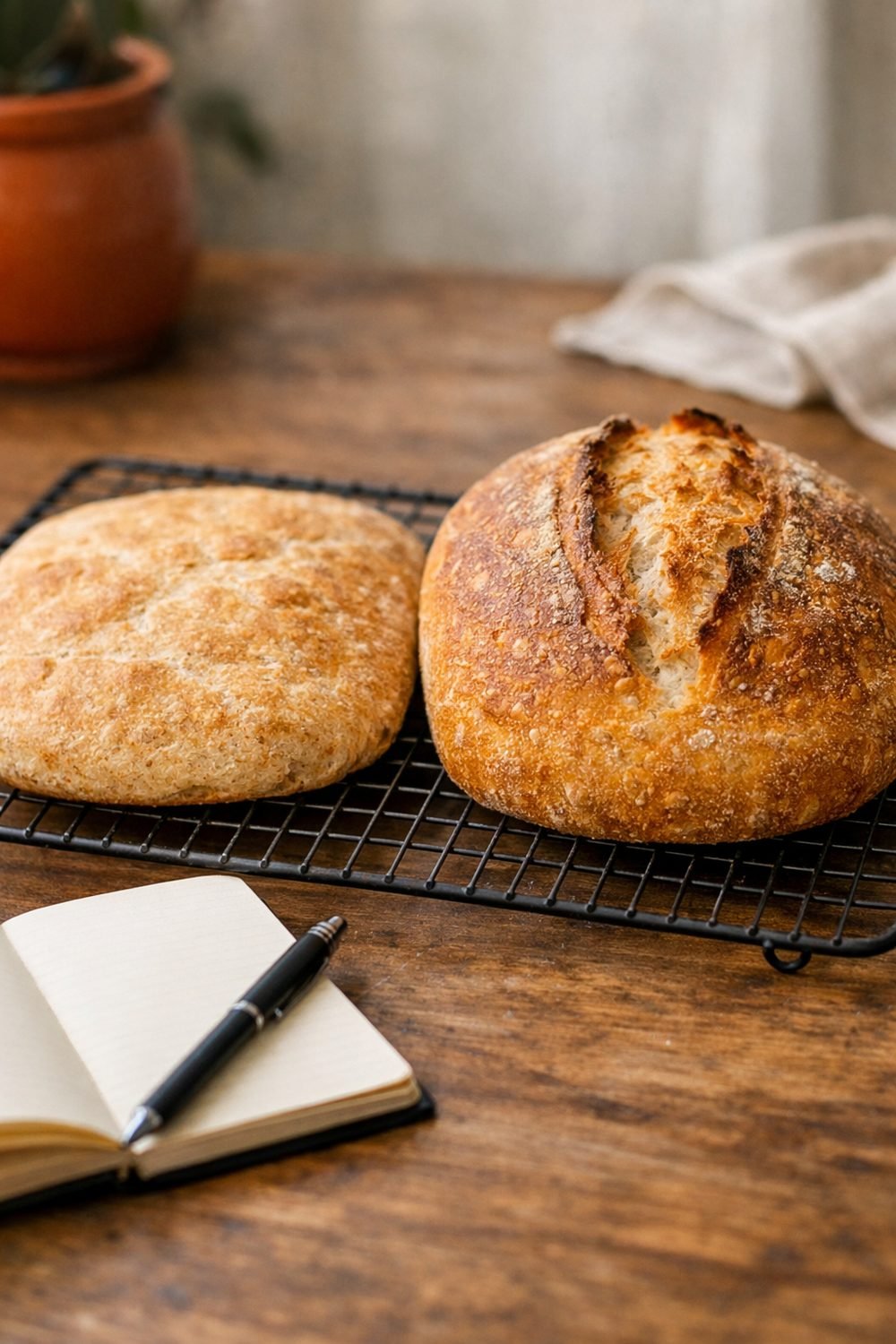
When a loaf comes out dense, pale or flat, guessing rarely helps. A simple bread baking troubleshooting log lets you note what changed, from the ingredients and oven temperature to the rise and the baking pan set you used, so you can spot patterns and fix one thing at a time.
You might bake a loaf, end up with a brick, and swear you'll do better next time. Then next time came, and I couldn't remember what I'd done the first time. Was the water too hot? Did I let it rise for an hour or two? No idea.
That's a good moment to start keeping a bread baking troubleshooting log. Nothing fancy. Just a few lines after every bake. It's honestly the most useful thing I've done for my bread, more useful than any new pan or special flour.
Here's how to keep a log, what to write down, and how to use it to figure out what went wrong, plus where your bread storage container fits in.
Short on time? Our top picks: OXO Good Grips Oven Thermometer, ThermoWorks Thermapen, OXO Good Grips Stainless Steel Food Scale and Escali Primo Digital Scale. See all picks
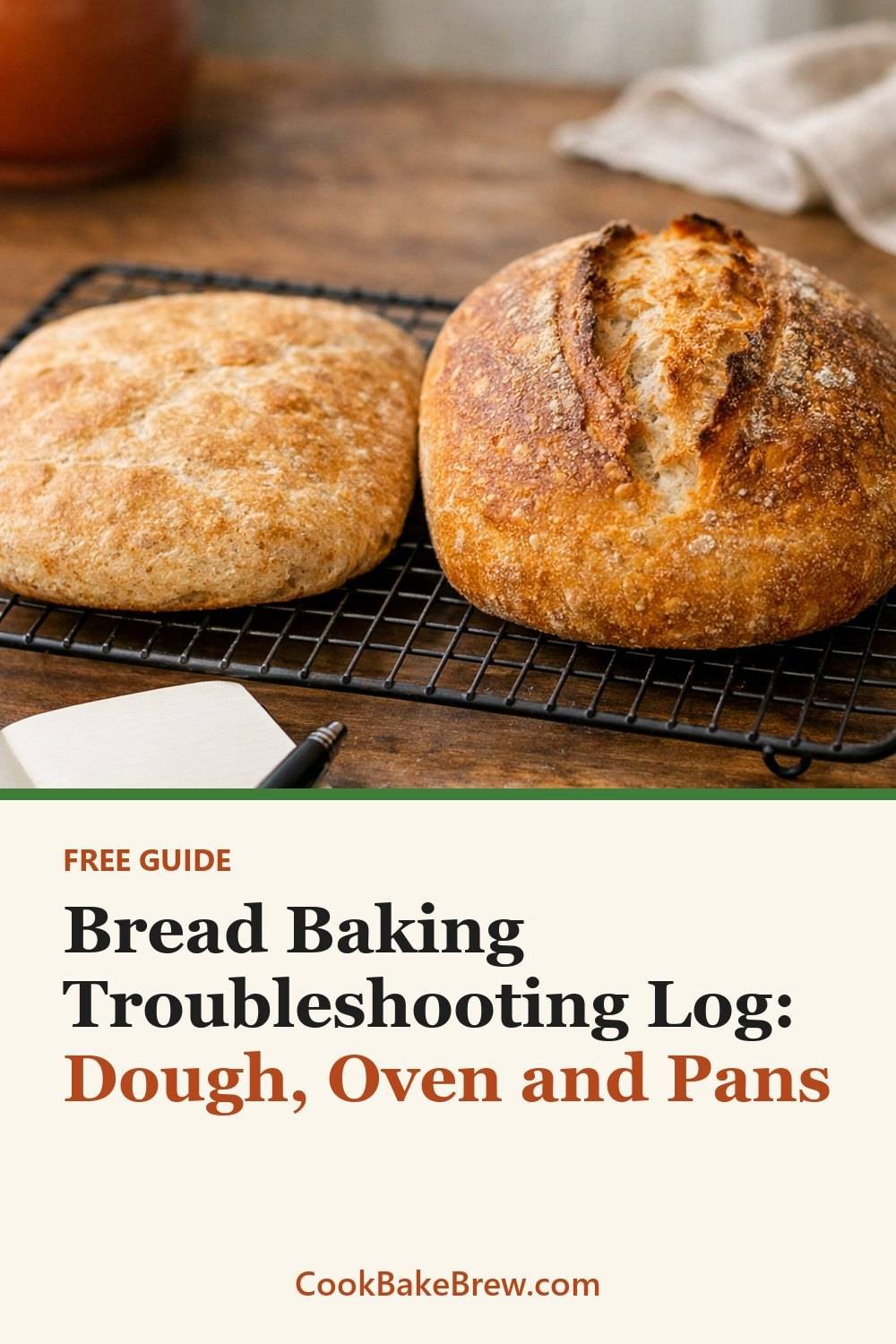
Start Your Bread Baking Troubleshooting by Naming What Went Wrong
Before you can fix a loaf, you need to describe it. "Bad" isn't helpful. Try to be specific about what you see and feel when you cut into it.
These are the problems that tend to show up most often in a log like this:
- Dense: tight crumb, heavy for its size, maybe a little gummy
- Flat: spread out sideways instead of rising up
- Pale: crust looks washed out, not golden
- Big holes under the crust: a tunnel or gap near the top
- Collapsed: rose well, then sank in the oven or right after
It also helps to write down what was good. Sometimes the crust was perfect but the inside was off. That tells you something too. A loaf is rarely all wrong.
One small tip: write your notes the same day. Waiting until the next morning is risky, since half the loaf may be eaten by then and the look of the crumb forgotten.
Look Hard at Your Ingredients
Yeast, whether it's Red Star Platinum Yeast or another brand, is my first suspect almost every time. If it's old or was stored somewhere warm, it may not have much life left. Write the date you opened the jar on the lid, which sounds fussy but can save you from guessing about freshness.
If you're not sure about your yeast, you can test it. Mix a little with warm water and a pinch of sugar and wait about ten minutes. If it gets foamy, it's working. If nothing happens, that's your answer.
Flour matters too. Bread flour and all-purpose flour act differently because of how much protein they have. If you swapped one for the other, note it. Same goes for using a new brand.
And don't forget the small stuff. Salt slows yeast down, so forgetting it can make dough rise too fast and then collapse. Too much salt can do the opposite. Measure salt carefully, since a mistake can give you a very flat, very salty loaf.
Weighing vs. cups
If you measure flour with cups, the amount can change a lot depending on how you scoop it. I switched to a kitchen scale, such as the Escali Primo Digital Scale, a while back and my loaves got more consistent. If you don't have one, at least note how you measured, like "spooned and leveled" or "scooped straight from the bag."
Temperature Is Sneaky, Even in Your Oven
This one took me the longest to understand. Temperature affects bread in two places: the dough while it rises, and the oven while it bakes.
Dough rises faster in a warm kitchen and slower in a cold one. In winter, a kitchen can feel chilly, and a recipe that says "rise for one hour" might need closer to two. In summer, the same dough can overproof before I've even finished the dishes.
So I write down roughly how warm the room felt. You don't need an exact number. "Cold kitchen, heater off" or "hot day, windows open" is enough to spot patterns later.
The oven is the other half. Lots of home ovens run hotter or cooler than the dial says. Mine runs a little cool, which explained a whole string of pale loaves. An inexpensive oven thermometer, such as the OXO Good Grips Oven Thermometer, helped me see that, and it cost far less than shopping for toaster ovens on sale. If your crust keeps coming out pale or your bottoms keep burning, the oven is worth checking.
Also note whether you preheated fully. It's easy to put bread in the oven too early out of impatience. It shows.
By the way, if you like having recipes on cards you can grab while cooking, I've got a free set of 3 soup recipe cards for anyone who joins the email list, and soup goes pretty well with fresh bread.
Timing: The Rise Is Where Most Loaves Go Wrong
Recipes give times, but dough doesn't read recipes. It goes by temperature, yeast, and flour. That's why I write down the actual time, not just what the recipe said.
Here's what I've learned to watch for:
Underproofed dough often bakes up dense, with a tight crumb. Sometimes it bursts open on one side in the oven because it still had too much energy left.
Overproofed dough tends to go flat or collapse. It rose so much that it couldn't hold its shape anymore. You might also notice a strong, boozy smell.
The poke test helps. Press a floured finger gently into the dough. If it springs back fast, give it more time. If it springs back slowly and leaves a small dent, it's usually ready. If the dent just stays there, it may have gone too far. It's not perfect, but paired with your notes, it gets easier to read.
Write both rise times separately: first rise and second rise. They can go wrong in different ways.
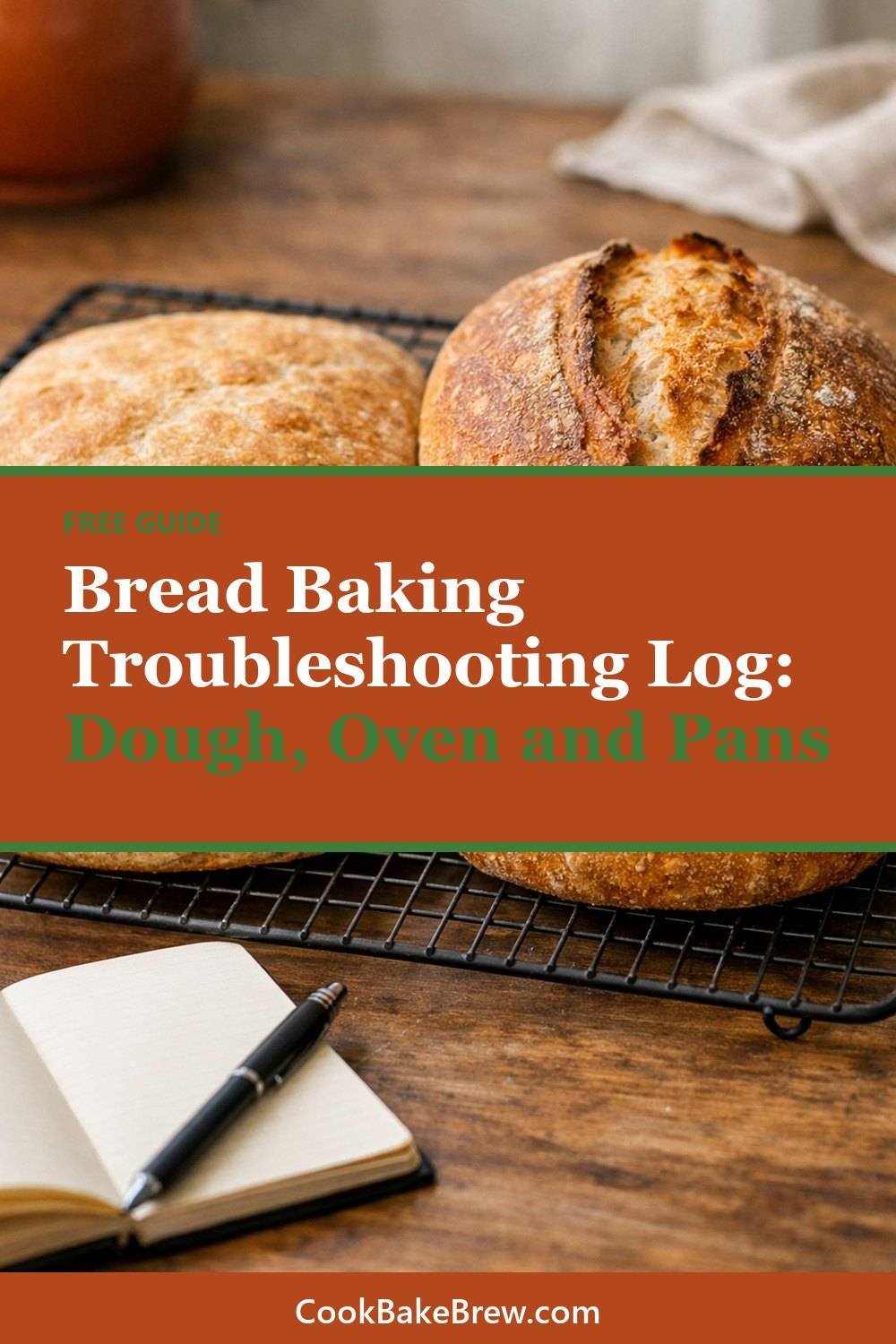
Change Only One Thing at a Time
This is the hardest rule for me, because when a loaf fails, I want to fix everything at once. New yeast, longer rise, hotter oven, different flour. Then the next loaf comes out great and I have no clue which change did it.
Pick the most likely cause and change just that. If your bread was dense and you think it was underproofed, let it rise longer next time and keep everything else the same.
Yes, it's slower. But after a few bakes, you'll actually know your bread instead of guessing. Skip the urge to buy a new baking pan set or a bread mixer until you've tried this. Most of my problems turned out to be timing or temperature, not equipment, and the best mixer for baking wouldn't have fixed them.
What to Write in Your Log, Including Your Baking Pan Set
You don't need a novel. Mine usually takes two or three minutes. Here's roughly what I put down for each bake:
- Date and recipe name
- Flour type and how I measured it
- Yeast type and how old it was
- Room feel (warm, cool, normal)
- First and second rise times
- Oven temperature and bake time
- How it turned out, good and bad
- The one thing I'll change next time
That last line is the most important. It turns the log from a diary into a plan.
A plain notebook works fine, and it can live right next to your modern bread box. An old spiral pad works fine for a log, flour smudges and all. If you'd like something laid out for you, the Home Cook's Kitchen Journal and Recipe Log below this post has space for this kind of note. And if you bake without gluten, the Gluten-Free Bread Baking Log and Recipe Cards below are made for that, since gluten-free dough behaves pretty differently.
Tools That Make Bread Troubleshooting Easier
You don't need much gear to fix most loaves, but a few simple tools make your notes more reliable. Here are some well-known options that fit the habits above.
OXO Good Grips Oven Thermometer
Suits anyone whose loaves keep coming out pale or with burnt bottoms. Check that it hangs or stands securely on your rack and that the dial is easy to read through your oven window.
ThermoWorks Thermapen
A fast instant-read probe that suits bakers who want to check dough temperature, water temperature or a loaf's doneness. Think about whether you bake often enough to want a more serious tool than a basic probe.
OXO Good Grips Stainless Steel Food Scale
A good fit if you want to stop guessing with cups and measure flour by weight. Check the maximum capacity and whether it has a tare function, so you can weigh ingredients in your mixing bowl.
Escali Primo Digital Scale
A compact kitchen scale for people with limited counter space. Look at the unit options and the platform size before buying, so a large bowl fits comfortably.
Red Star Platinum Yeast
Suits bakers who want a dependable dry yeast to rule out one common cause of flat loaves. Check the date on the package and how you store it once opened.
King Arthur Bread Flour
A widely available flour for bakers who want a consistent, higher-protein option when comparing loaves. Make sure your recipe calls for bread flour, since swapping it for all-purpose can change how the dough behaves.
Rubbermaid Brilliance Food Storage Containers
Handy for bakers who want a clear, lidded container to watch dough during the rise. Check that the size leaves room for your dough to double.
Please check current plans and prices on each brand's own site before you buy.
FAQ
How many bakes before I see a pattern?
For me, it usually showed up after four or five loaves of the same recipe. Patterns are easier to spot when you stick with one recipe for a while. Jumping between recipes makes it harder to compare.
Do I need to log every single bake?
Not forever. Log every bake when you're learning a new recipe or something keeps going wrong. Once a loaf is reliable, I just jot down anything unusual.
My bread is always dense. Where should I start?
Check your yeast first, then look at your rise time and room temperature, and make sure your bread storage container isn't hiding stale slices from an earlier bake. Dense bread is often underproofed. Try a longer rise while keeping everything else the same.
Is a digital log better than paper?
Whatever you'll actually use is better. Paper has the advantage that you can write with doughy hands without worrying about your phone. Some people prefer notes on their phone because it's always with them.
Wrapping Up
A bread log won't make every loaf perfect. Mine still has plenty of entries that say "flat again." But it turns each failure into a clue. Name the problem, check your ingredients, temperature, and timing, change one thing, and write it all down. Over time, your notes start doing the thinking for you.
If you'd like something to cook alongside your next loaf, grab the free 3 soup recipe cards by joining the email list in the box on this page. Then take a look at the journals below this post if you want a ready-made place to keep your baking notes. Or just find a notebook and start with tonight's bake. That works too.
Printables and tools that can help
Gluten-Free Bread Baking Log and Recipe Cards
A printable baking log and recipe cards to note what you bake and how it turned out. Check ingredient labels...
See detailsHome Cook's Kitchen Journal and Recipe Log
A 100-page journal for recipes, notes and what you cooked, in your own...
See details