Best Espresso Coffee Maker Buying Guide: What to Compare
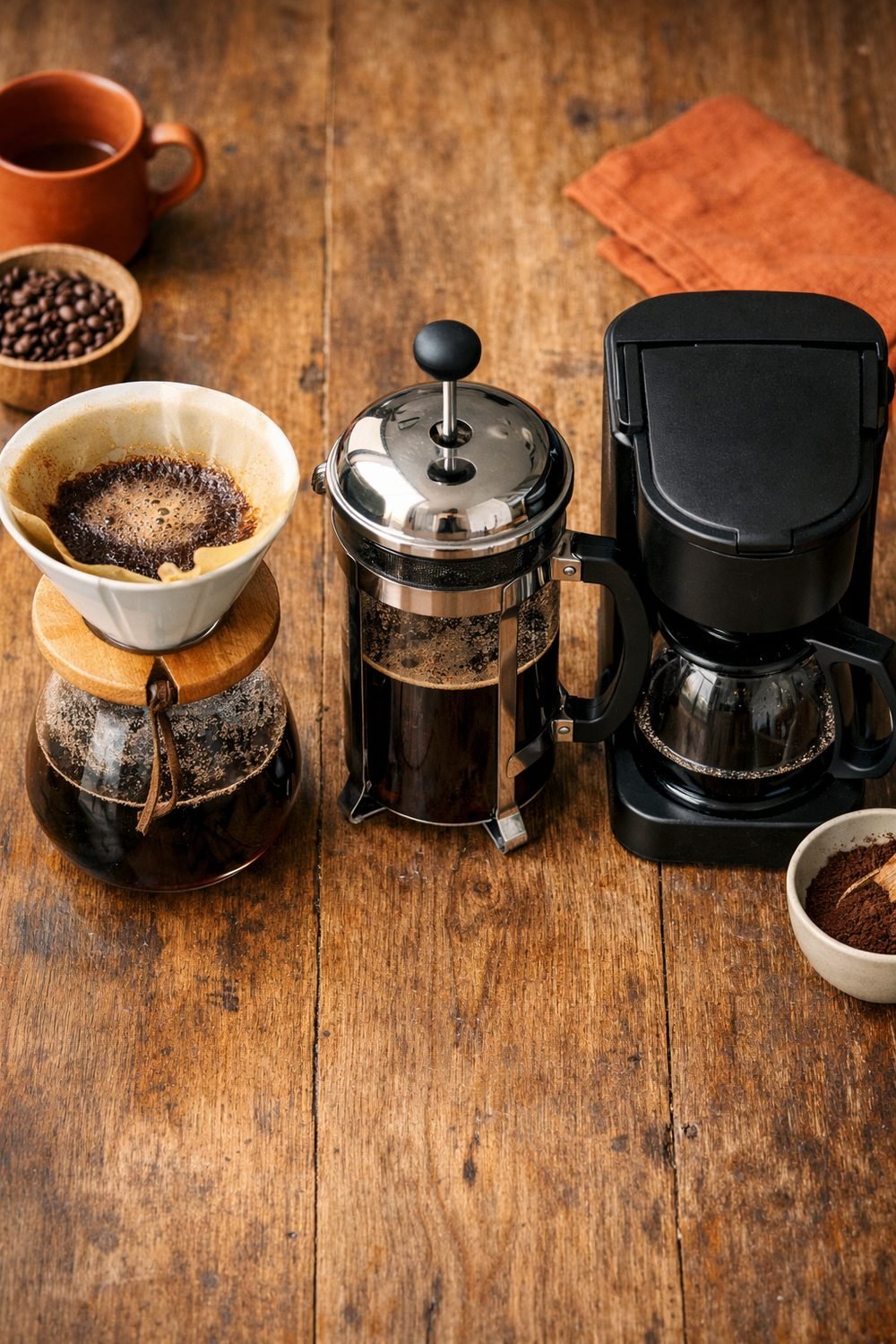
Finding the best espresso coffee maker comes down to a few practical questions: how many cups you need, how much counter space you have, how easy it is to clean, and which brew options you will actually use. This guide walks through each point so you can compare models calmly and choose the one that fits your routine.
There are a lot of coffee makers out there, from the best espresso coffee maker to a simple drip machine, and most of them look pretty similar in the store photos. A black box, a glass pot, a few buttons. But once one is sitting on your counter and you're using it every morning, the small differences start to matter a lot.
A coffee maker can brew well and still be a pain to clean, so check how easy it is to take apart. Another made good coffee but took up half my counter. So before you compare models, I'd start with a simpler question: how do you actually drink coffee? One mug before work? A full pot for the family on Sunday? Iced coffee all summer? Your answer shapes almost everything else in this guide.
Below, I'll walk through what I'd compare, what I'd skip, and the mistakes I've made so you don't have to.
Short on time? Our top picks: Technivorm Moccamaster, Breville Bambino, Keurig K-Elite and Ninja Programmable XL. See all picks
Quick summary
- Cup count first: pick single-serve or a carafe based on how many cups you really make on a normal day.
- Measure your space: check the height under your cabinets, not just the width of the counter.
- Cleaning matters more than you think: removable parts and a reachable water tank make daily use easier.
- Match brew options to your habits: pods, ground coffee, or both. Don't pay for options you won't use.
- Timers are nice, not required: great if you want coffee ready when you wake up, easy to skip if you don't.
- Read the seller's page closely: capacity, filter type, warranty, and care instructions are all listed there.
How Many Cups Do You Really Need?
This is the first fork in the road. Most coffee makers fall into two camps: single-serve machines that make one cup at a time, and drip machines that brew a full carafe.
Single-serve makers
These are handy if you live alone or if everyone in your house drinks coffee at different times. You make one cup, it's fresh, and nothing sits around getting bitter on a hot plate.
The downside is speed when you need more than one cup. If you have guests over, you'll be standing at the machine for a while, brewing mug after mug. It's easy to overlook until you're serving a crowd, such as at a family brunch. Not fun.
Carafe drip makers
A carafe model brews several cups at once. It's the classic choice for households where two or more people want coffee in the morning, or for anyone who drinks a few cups through the day.
One thing to watch: the "cup" number on the box often refers to a small cup, not a big mug. Check the seller's page for the actual capacity in ounces or milliliters if it's listed. A "12-cup" machine might fill fewer of your real mugs than you expect.
A quick way to decide
Think about your most normal morning, not your busiest one. If you usually make one or two cups, a single-serve or a small carafe probably fits. If you're filling travel mugs for three people, go bigger. You can always make a second pot on the rare day you need it.
Counter Space and Size
This is the step people most often skip, and it tends to cause the most regret. A coffee maker that doesn't fit where you want it ends up on a random corner of the counter, or worse, in a cupboard you never open.
Measure height, not just width
Grab a tape measure and check the space between your counter and the bottom of your upper cabinets. Many machines need room on top to open a lid or fill a water tank. If the lid can't open while the machine is under the cabinet, you'll have to slide it out every single time.
Think about depth too
Some machines are deep from front to back. That's fine on a big counter, but on a narrow one it can stick out past the edge. Look for the dimensions on the seller's page and compare them to your actual spot.
Where will the cord reach?
Small thing, but check where your outlets are. A short cord can limit where the machine can live. It's easy to end up rearranging half your counter because the cord won't reach the spot you planned for it.
Ease of Cleaning
Here's where daily life gets real. A coffee maker that's a pain to clean will slowly stop getting cleaned, and that usually shows up in the taste.
Removable parts
Look for a filter basket that lifts out easily. A removable water tank is also a big plus, because you can fill it at the sink and rinse it out now and then. Machines where you have to pour water into a fixed tank tend to get messy.
Dishwasher-safe or hand wash?
Some parts are listed as dishwasher-safe, and some aren't. Don't guess on this one. The seller's page or the manual will say which parts can go in the dishwasher. Putting the wrong part in can warp it or ruin it.
Descaling
Over time, minerals from water build up inside the machine. Most makers need to be descaled every so often. Some have a cleaning reminder light, which I actually find useful because I forget. Check the care instructions to see what the maker recommends and what cleaning products are safe for that model.
Glass coffee maker carafe shape
A carafe with a wide opening is much easier to scrub than one with a narrow neck. You'd be surprised how much coffee residue sticks to the inside of a glass pot after a few weeks.
Brew Options: What Do You Actually Use?
This is where machines start to differ a lot, and where it's easy to get pulled toward features you won't touch.
Ground coffee vs. pods
A k pod coffee maker, such as the Keurig K-Elite, is quick and tidy. You pop in a pod, press a button, done. Ground coffee machines give you more freedom to pick any coffee you like and adjust how strong it is.
Some machines do both. That can be handy if your household is split, but it also usually means more parts to clean. Think about which one you'll use 90% of the time and lean toward that.
Strength settings
Some drip makers have a "bold" or "strong" button. It usually slows the brew a bit so the water stays in contact with the grounds longer. If you like a stronger cup, it can be nice. If you just add more grounds anyway, you might not need it.
Iced coffee and specialty settings
Some machines, including a latte coffee maker, have an iced setting, a small-batch setting, or a hot water option for tea. These can be genuinely useful. They can also be things you press once and forget about. Only pay extra for these if you can picture yourself using them every week.
Filter type
Some machines use paper filters, and some come with a reusable mesh filter. Reusable filters save you from buying paper, but they need rinsing after each use. Paper filters are easy to toss out. Neither is wrong. It just depends on what you'd rather deal with in the morning.
Quick side note: if you're the type who loves cozy kitchen staples, you can grab our Free 3 Soup Recipe Cards by joining the email list.
Coffee Maker with Timer and Programmable Features
A programmable timer lets you set the machine the night before so coffee is brewing when you wake up. For some people, that's the whole reason to buy a particular model.
When a timer is worth it
If you get up early and want coffee ready the second you walk into the kitchen, a timer is great. If you have early shifts, a programmable coffee maker can make those mornings a little less painful.
When you can skip it
If you like to grind your beans fresh in the morning, or if your wake-up time changes a lot, you probably won't use a timer much. Also, some people find that ground coffee sitting in the machine overnight tastes a bit flat. That's a matter of taste, so it's worth thinking about.
Auto shut-off and keep-warm
Many carafe machines have a hot plate that keeps coffee warm and turns off after a while. Check the seller's page to see how long it stays on and whether you can adjust it. A thermal carafe is another option. It keeps coffee warm without a hot plate, which some people feel keeps the taste better over time.
Best Espresso Coffee Maker Types, Compared Side by Side
Here's a plain-language comparison of the main styles you'll run into. This isn't about brands, just the general way each type works.
Basic electric coffee maker
Simple, familiar, and usually easy to use. Good for households that want a pot of regular coffee every day. Fewer buttons, fewer things to break.
Programmable drip machine
Same idea, plus a timer and often a strength setting. Good if you want coffee ready when you wake up.
Single-serve k cup coffee maker
Fast and tidy. Best for one person or households with different schedules. You'll be limited to the pods that fit the machine.
Single-serve ground coffee machine
Makes one cup using your own grounds. A good middle ground if you want fresh single cups but don't want to buy pods.
Combo coffee and espresso maker (the Cuisinart Coffee Center is one example)
Does both carafe and single-serve, or pods and grounds. Flexible, but bigger and usually more to clean.
When I compare a few models, I like to write them down side by side with the same details for each: capacity, size, filter type, cleaning notes, and features. We have a ready-made version of that idea for another appliance, the Air Fryer Buyer's Guide and Comparison Sheets below this post. The same approach works for coffee makers too, just jot down the details you care about in columns.
Reading the Seller's Page Carefully: A Coffee Maker Buying Guide Step
The product photos tell you very little. The details are in the listing, and it pays to read the boring parts.
What to look for
- Capacity: in ounces or milliliters, not just "cups."
- Dimensions: height, width, and depth, so you can check your counter.
- Filter type: paper, reusable, or pods, and what size or style.
- Care instructions: which parts are dishwasher-safe and how to descale.
- Warranty and return policy: how long it lasts and what it covers.
- Power and safety notes: auto shut-off, keep-warm time, and any listed safety features.
Reviews, with a grain of salt
Customer reviews can point out things the listing doesn't mention, like a leaky lid or a hard-to-reach water tank. Look for patterns. One angry review doesn't mean much. Ten people saying the carafe drips is worth paying attention to.
Watching prices
Coffee maker prices can shift over time. If you're not in a rush, it can help to note the price of a few models and check back. For air fryers specifically, we made a Price-Watch Tracker for Air Fryers, also below this post, but a simple notebook page works fine for coffee makers.
Common Mistakes
These mistakes are common, so there's no judgment here.
- Buying for your busiest day. A huge machine for the one holiday a year when the whole family visits often just takes up space the rest of the time.
- Forgetting to measure under the cabinets. The lid won't open, and suddenly you're sliding the machine back and forth every morning.
- Paying for features you won't use. Seven brew settings sound fun. Most people use one.
- Ignoring the cleaning. If parts don't come out easily, you'll clean it less, and your coffee will show it.
- Trusting the "cup" number. Check the actual capacity so you're not surprised by how small a "cup" really is.
- Not checking pod or filter costs. The machine is one cost. Pods or filters keep costing you. Look at what the machine needs before you buy.
- Skipping the warranty details. It takes two minutes to read, and you'll be glad you did if something goes wrong.
My Honest Take on What's Overrated
Fancy displays and lots of buttons make a luxury coffee maker look impressive in the store. In real life, I've found that the simplest machines often last longer and are easier to live with. Fewer parts, fewer things that can go wrong.
What I'd actually pay attention to is the stuff you touch every day. How easy is it to fill? How easy is it to clean? Does it fit where you want it? Get those right and the rest is a bonus.
That said, if a timer gets you out of bed on hard mornings, that's a real reason to want one. Buy for your life, not for the feature list.
Coffee makers worth a look
These are well-known machines and brands that cover the main styles we talked about above. Use them as a starting point, then compare the details that matter for your kitchen.
Technivorm Moccamaster
A good fit for people who want a carafe drip machine and like a simple, no-fuss design. Check the size and the carafe style against your counter and how many mugs you usually fill.
Breville Bambino
Suits anyone who wants an espresso-style drink at home and enjoys a bit of hands-on making. Check how much counter space it needs and whether you are happy to learn some technique.
Keurig K-Elite
A familiar single-serve option for people who want one quick cup and different schedules in the house. Check which pod types it accepts and what ongoing pod costs look like for you.
Ninja Programmable XL
Suits households that want a programmable carafe machine with a timer for early mornings. Check the carafe capacity in ounces and how easy the parts are to clean.
Cuisinart Coffee Center
A combo style that can brew a carafe and a single cup, which helps if your household drinks coffee in different ways. Check the footprint, since combo machines tend to be larger and have more parts to wash.
OXO Brew 8 Cup
A good match for people who want a mid-size drip maker with a straightforward routine. Check the water tank access and the dimensions under your cabinets.
Hamilton Beach FlexBrew
Suits people who want to switch between pods and ground coffee. Check that you will really use both options, since that can mean extra cleaning.
Check current plans and prices on each brand's own site before you decide.
FAQ
Is a single-serve or carafe coffee maker better?
It depends on how you drink coffee. Single-serve is great for one person or people on different schedules. A carafe makes more sense if two or more people want coffee at the same time.
How often should I clean my coffee maker?
Rinsing removable parts after each use is a good habit. For deeper cleaning and descaling, follow the instructions in the manual or on the seller's page, since each model can be a little different.
Are programmable timers worth it?
They're worth it if you want coffee ready right when you wake up and your schedule is fairly steady. If you like to brew fresh each morning, you can probably skip it and save the extra cost.
Does a thermal carafe make a difference?
A thermal carafe keeps coffee warm without a hot plate. Some people prefer it because coffee on a hot plate can taste stronger or more bitter the longer it sits. It's a personal preference, so think about how long your coffee usually sits before you drink it.
Your Next Step
Before you buy, grab a tape measure, think about your normal morning, and write down two or three models you're curious about. Compare the boring details, because those are the ones you'll live with. While you're here, sign up for our Free 3 Soup Recipe Cards using the box on this page, and then take a look at the Air Fryer Buyer's Guide and Comparison Sheets and the Price-Watch Tracker for Air Fryers below this post if you're shopping for other kitchen gear too.
Printables and tools that can help
Air Fryer Buyer's Guide and Comparison Sheets
A printable guide and comparison sheets to note what matters to you before you look at any seller...
See detailsPrice-Watch Tracker for Air Fryers
A browser notebook where you enter the prices you see and it tells you when you reach your own...
See details