Gluten-Free Bread Baking: Keep a Log
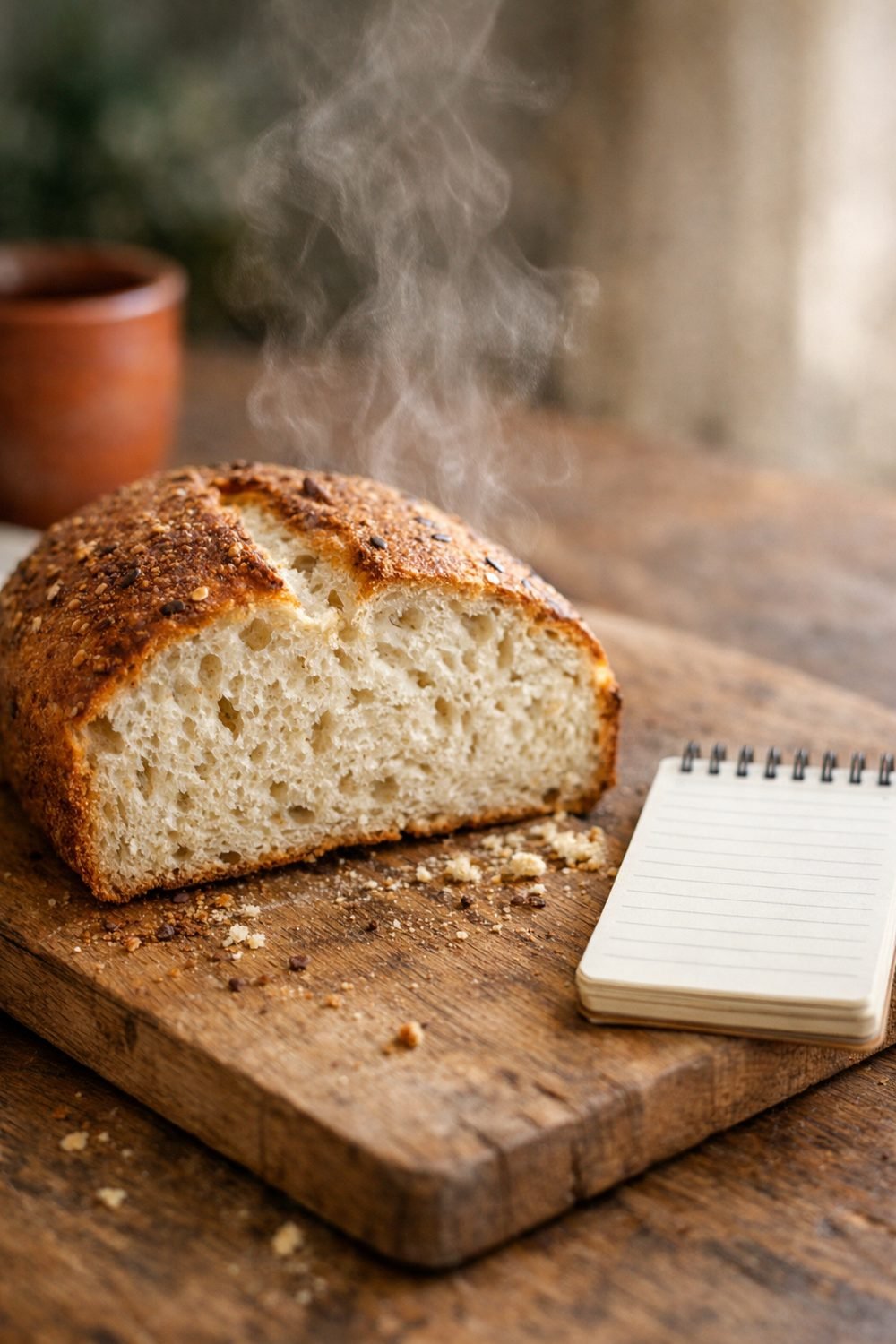
A first gluten-free loaf worth liking often turns up by surprise, long before anyone starts keeping a gluten free bread baking log. It had a soft crumb, a crust that crackled a little, and it sliced cleanly without falling apart. It's a thrilling moment. If you try to make it again the next weekend and end up with a dense, gummy brick, a missing detail from the first bake is often the reason.
The problem wasn't luck. The trouble is that it's easy to forget exactly what you did. Had I let it rise longer? Used a different flour blend? Baked it on the lower rack? Without notes, there's no way to know. That's a good time to start a bread baking log, which can change how you bake more than any new pan or fancy flour.
Gluten-free bread is fussy. Small changes make a big difference, and that's exactly why writing things down helps so much. A log lets you repeat what worked and figure out what didn't. Here's how I keep mine.
Short on time? Our top picks: OXO Good Grips Kitchen Scale, Thermapen ONE, ThermoWorks Oven Thermometer and Lodge Dutch Oven. See all picks
Write the Recipe in Your Bread Baking Log Exactly as You Made It
This sounds obvious, but it's where most people slip up. You don't want the recipe as it was printed. You want the recipe as it actually happened in your kitchen that day.
If the recipe said 400 grams of flour blend and you had 380 grams left in the bag, write 380. If you swapped psyllium husk powder for whole husks, write that down. If you used warm water straight from the tap instead of measuring the temperature, note it.
I like to weigh everything when I bake gluten-free, and a basic scale like the OXO Good Grips Kitchen Scale makes that easy. Cups can vary a lot with these flours because they pack differently. If you're using a scale, your log becomes much more useful, since you can repeat the exact amounts later.
Here's what I usually record in my bread baking log checklist for each bake:
- The date
- Every ingredient with its weight or measure
- The brand of flour blend, if I'm using a store-bought one
- Water temperature, if I checked it
- How long the dough rose and roughly how warm the kitchen felt
That last one matters more than you'd think. A kitchen in January is a very different place than the same kitchen in July. A rise that takes an hour in summer might need nearly two in winter.
Note the Oven Time and Temperature
Ovens lie. Mine runs a bit hot, and I didn't know that for years. So I write down the temperature I set, and if I have an oven thermometer inside, I write down what it actually read too.
Gluten-free bread often needs a longer bake than you'd expect. The outside can look done while the middle is still wet. Note the total baking time, plus anything you did along the way. Did I cover it with foil halfway through? Did I take it out of the pan for the last ten minutes? Did you use a Dutch oven with the lid on for part of the time?
If you use an instant-read thermometer such as the Thermapen ONE to check the inside of the loaf, record that number too. It's one of the most reliable ways to know when your bread is truly baked, and having it in your log means you won't have to guess next time.
One small habit worth adopting: write down which rack you used. It sounds picky. But moving the loaf up one rack can stop the bottom from burning. That's hard to spot without notes.
Describe the Result Honestly in Your Baking Log
This is the fun part, and also the part people skip. Once your bread has cooled (and please let it cool, because gluten-free bread keeps setting as it cools), cut a slice and really look at it.
Don't just write "good" or "bad." Those words won't help you later. Try to describe what you see and taste.
Texture
Is the crumb open with big holes, or tight and even? Is it gummy near the bottom? Does it crumble when you slice it, or hold together? Is the crust crisp, chewy, or soft?
Taste
Does it taste a little bland? Too salty? Is there a bean flavor from the flour blend that you don't love? Some blends have a taste I notice right away, and writing that down helped me switch to one I liked better.
How it keeps
Add a note the next day too. Gluten-free bread can go stale fast. Did it stay soft? Was it better toasted? This tells you whether a recipe is a sandwich bread or more of an eat-it-today loaf.
You can also give each bake a quick score out of ten. It's not scientific, but when you flip back through your pages, you can find your best loaves in seconds.
By the way, if you like having recipes written out neatly, you can grab our Free 3 Soup Recipe Cards when you join the email list, and soup with fresh bread is hard to beat.
Change One Thing at a Time
This one is easy to learn the hard way. After that gummy loaf, I got impatient. Next bake, I added more water, baked it longer, and switched flours all at once. The bread was better. But I had no clue which change fixed it.
If you change one thing per bake, your log turns into a real record of cause and effect. Maybe this week you try a longer rise. Next week you lower the temperature a bit and bake longer. Each time, you'll know exactly what made the difference.
Yes, it's slower. There's no point pretending otherwise. But it's far less frustrating than baking ten loaves and still not knowing why one of them turned out great.
In my log, I mark the change clearly, usually with a star or by writing "CHANGED:" at the top of the entry. That way it jumps out when you're reading back.
Check Ingredient Labels for Your Own Needs
Everyone bakes gluten-free for different reasons. Some people are avoiding gluten because of a health condition, some are baking for a family member, and some just like the bread. Your needs might be stricter than mine, or different in other ways.
That's why it helps to write down the exact products you use and check their labels each time you buy them. Brands can change their recipes or where they make things. A flour I trusted last year might be packaged differently now.
This post can't say which products are safe for you. That really depends on your situation. If you're baking for a medical reason, read the label and the maker's own information carefully, and talk to your doctor or a dietitian if you're unsure. Keeping the product names in your log just makes it easier to stick with the ones you've already checked.
Keep Your Bread Baking Log Printable and Simple Enough to Use
Here's my honest opinion: the fanciest system is the one you'll stop using. Some people build huge spreadsheets with color coding and formulas. That's fine if you love that. But for most of us, a notebook on the counter works better, because flour-covered hands and laptops don't mix.
Some people use their phone and snap a photo of each loaf, then add notes. That works well, especially for crumb photos. Doing both works well. Take a quick picture of the sliced loaf and jot the details on paper.
If you'd like a bread baking log template that's already set up, we have a Gluten-Free Bread Baking Log and Recipe Cards below this post, ready to download and print. It's a baking log printable with spaces for the things I've talked about here, so you don't have to remember what to write each time. There's also the Home Cook's Kitchen Journal and Recipe Log if you want one place for all your cooking, not just bread.
Review Your Notes and Keep the Best Version
Every few weeks, I sit down with a cup of coffee and flip through my bread baking log. It's surprisingly satisfying. You start to see patterns. Maybe every loaf with a longer rise scored higher. Maybe one flour blend keeps showing up in your best bakes.
When I land on a loaf I really love, I copy that version onto a clean recipe card. Just the final, best recipe, with all my small changes worked in. That card becomes my go-to. The messy log pages stay as the backstory.
And don't toss your failures. Some of my most useful notes come from loaves that flopped. They remind me what not to do.
Tools and Products Worth Considering
A good log gets easier with a few simple tools by your side. Here are some well-known options that fit gluten-free bread baking and note-keeping.
OXO Good Grips Kitchen Scale
Suits bakers who want to weigh gluten-free flours instead of relying on cups. Check that the capacity and unit settings suit the amounts in your recipes.
Thermapen ONE
A well-known instant-read thermometer for checking the inside of a loaf. It suits anyone who wants a firm doneness number to write down. Check whether the price fits your budget, since simpler thermometers also work.
ThermoWorks Oven Thermometer
Suits bakers whose ovens may run hot or cool. Decide whether you prefer one that hangs from a rack or stands on it, based on your oven.
Lodge Dutch Oven
Suits people who like a crackly crust and want to bake with the lid on for part of the time. Check the size against your loaf shape and how heavy you are comfortable lifting.
King Arthur Gluten-Free Bread Flour
A familiar store-bought blend for bakers who want a ready-made starting point. Always read the label yourself and note the blend in your log, since formulas can change.
Bob's Red Mill Gluten-Free 1-to-1 Baking Flour
Suits bakers who want a widely available blend to compare against others. Check the label and the maker's own information for your needs, especially if you bake for a medical reason.
Rhodia Dot Pad
A simple notebook option for people who prefer paper on the counter. Check the paper size and whether you want dotted, lined, or plain pages for jotting bake details.
Please check current plans and prices on each brand's own site before you buy.
FAQ
How long does it take before a baking log starts helping?
For me, it started paying off after about three or four bakes of the same recipe. That's when you can compare notes and see what actually changed the result. Even one entry helps, though, if you ever want to repeat a loaf.
Do I need a kitchen scale to keep a good log?
You don't strictly need one, but it helps a lot with gluten-free flours. Cup measures can vary from scoop to scoop. If you use cups, just be consistent in how you fill them and note your method.
What should I write if a loaf completely fails?
Write down everything, just like a good bake. Describe what went wrong, like a sunken middle or a raw center. Those notes often point straight to the fix.
Can I use one log for all my baking?
Sure. Some people like a separate log just for bread because gluten-free loaves have so many details. Others prefer one journal for everything. Pick whatever you'll actually keep up with.
A Quick Recap
A bread baking log doesn't need to be fancy. Write down what you really did, note your oven details, describe the loaf honestly, change one thing at a time, and check your labels. Then look back now and then and save your best version. That's how a lucky loaf turns into one you can make again.
If you'd like to start with something simple to cook alongside your bread, sign up for the email list and get the Free 3 Soup Recipe Cards. Then take a look at the Gluten-Free Bread Baking Log and Recipe Cards and the Home Cook's Kitchen Journal and Recipe Log below this post, and see if one fits the way you bake.
Printables and tools that can help
Gluten-Free Bread Baking Log and Recipe Cards
A printable baking log and recipe cards to note what you bake and how it turned out. Check ingredient labels...
See detailsHome Cook's Kitchen Journal and Recipe Log
A 100-page journal for recipes, notes and what you cooked, in your own...
See details