How to Read a Recipe Before You Start

It's easy to get halfway through a banana bread before noticing a line that says "let the batter rest overnight," especially when it's already 7 p.m. This is a real problem when guests are coming the next morning. If you skim the recipe, see "bananas, flour, sugar," and start mashing, you can miss steps like this. That's why it pays to read a recipe all the way through before you touch a single bowl.
It sounds too simple to need a whole post. But knowing how to read a recipe properly is a small skill, and most of us were never taught it. We glance, we guess, and then we're standing at the stove with butter melting and no eggs in the fridge. This guide walks you through how I read recipes now, step by step, so the surprises happen on paper instead of in the pan.
Short on time? Our top picks: Paprika Recipe Manager, AnyList, Pyrex Glass Measuring Cups and OXO Good Grips Prep Bowls. See all picks
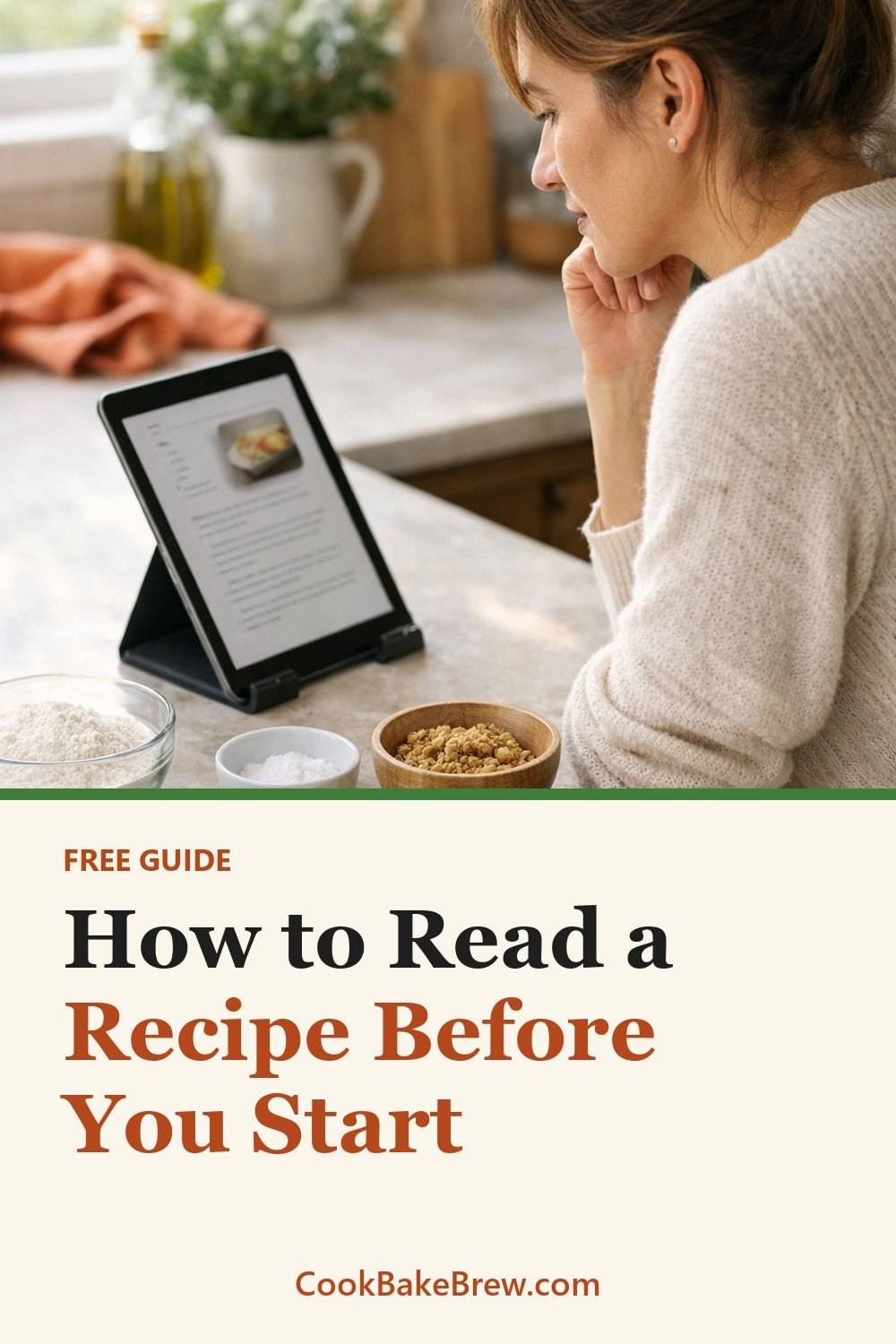
What you need to read a recipe well
- The recipe, printed or open on a screen you can keep nearby
- A pen or pencil (pencil is nice if you change your mind a lot)
- A scrap of paper, a sticky note, or a notebook
- About 5 to 10 minutes of quiet before you start cooking
- Access to your pantry, fridge, and cupboards so you can check things as you go
That's it. No special tools. The 10 minutes is the part people skip, and it's the part that matters most.
Step 1: How to read a recipe from start to finish
Before anything else, read every word of the recipe. The intro, the ingredient list, the method, and the little notes at the bottom. Don't stop at the ingredients and assume you know the rest.
The notes at the end are where recipe writers hide the important stuff. "This dough needs to chill for 2 hours." "Soak the beans the night before." "Best made a day ahead." If you only read the top half, you'll miss all of it.
It also helps to read the method once just to get the shape of it. Is it a one-pot thing? Does it go stovetop to oven? Are there two parts, like a filling and a crust, that come together at the end? Once you know the shape, the details make more sense.
Tip: Read it out loud if you tend to skim. It feels a little silly, but it slows you down enough to catch words like "divided," "softened," or "overnight."
Step 2: Check your ingredients against what you actually have
Now go through the ingredient list line by line and check your kitchen. Don't trust your memory. It's common to "know" you have baking powder, only to find an empty tin.
Look at amounts too, not just whether you have something. A recipe that needs 3 cups of broth won't work with the half carton in the fridge. And watch for ingredients that appear more than once. Sometimes sugar shows up in the dough and again in a topping, and the list says "divided" or splits it into two sections.
Pay attention to how each ingredient is described:
- "1 cup chopped onion" means you chop first, then measure.
- "1 onion, chopped" means one onion, whatever size it ends up.
- "Butter, softened" means it needs time out of the fridge, often 30 minutes or more.
- "Eggs, room temperature" is another one that needs planning.
If something's missing, now's the time to decide. Can you swap it? Should you go to the store? Or is this a "make something else tonight" situation? Any of those is fine. Finding out mid-recipe is the only bad option.
Tip: Write a quick shopping list right on your scrap paper or a Post-it note as you go. Even one item. It saves you from standing in the store trying to remember what was missing.
Step 3: Add up the real times
Recipe times are often hopeful. "Prep: 15 minutes" usually assumes your onions are already peeled and you chop like someone on a cooking show. Don't rely on memory. You probably don't either, and that's okay.
When you read a recipe, look for every time mentioned in the method, not just the total at the top. Marinating, rising, chilling, resting, cooling. These "waiting" times are easy to miss because nothing seems to be happening. But a cake that needs to cool fully before frosting can add an hour to your evening.
It helps to work backward. If I want dinner on the table at 6:30, and the recipe needs 40 minutes in the oven plus 10 minutes resting, it goes in by 5:40. Then I add my real prep time on top of that. Suddenly I know I should start around 5, not 6.
Tip: Be honest about your own speed. If you know you're slow with a knife, double the prep time the first time you make something. You can always relax if you finish early.
Step 4: Check your equipment
This one catches people more than you'd think. The recipe calls for a 9-inch springform pan and you have an 8-inch square one. Or it needs a food processor and yours is in a box in the garage.
Go through the method and pull out every tool mentioned. Pans, baking dishes, mixing bowls, a whisk, a thermometer, a rolling pin. Check the sizes. A different pan size can change how long things take to cook, and a dish that's too small might overflow.
Also think about your oven. If the recipe has you roasting vegetables at one temperature and baking bread at another at the same time, that won't work with one oven. Better to notice now.
Tip: Get the bigger tools out before you start. Setting the pan on the counter is a little reminder that you're ready, and you won't be digging through cupboards with dough on your hands.
By the way, if you'd like a few easy recipes to practice on, my free 3 Soup Recipe Cards are yours when you join the email list.
Step 5: Look up any recipe term you don't understand
Recipes use a lot of shorthand. "Fold in." "Cream the butter and sugar." "Cook until translucent." "Bring to a simmer." If any word makes you pause, figure it out before you start, not while the pan is hot.
The same goes for unfamiliar ingredients. If you've never cooked with something, it's worth a quick look at how it's usually handled. And if you're cooking for someone with an allergy or a health condition, check labels carefully and ask them, or a professional, if you're unsure. That's not something to guess on.
Honestly, I think this is the most overlooked step. People don't want to feel like beginners, so they skip it and wing it. But knowing what "soft peaks" look like before you start whipping cream is the difference between fluffy and butter.
Tip: Circle any word you're unsure about on the first read. Then deal with all of them at once before you begin.
Step 6: Prep everything before you turn on the heat
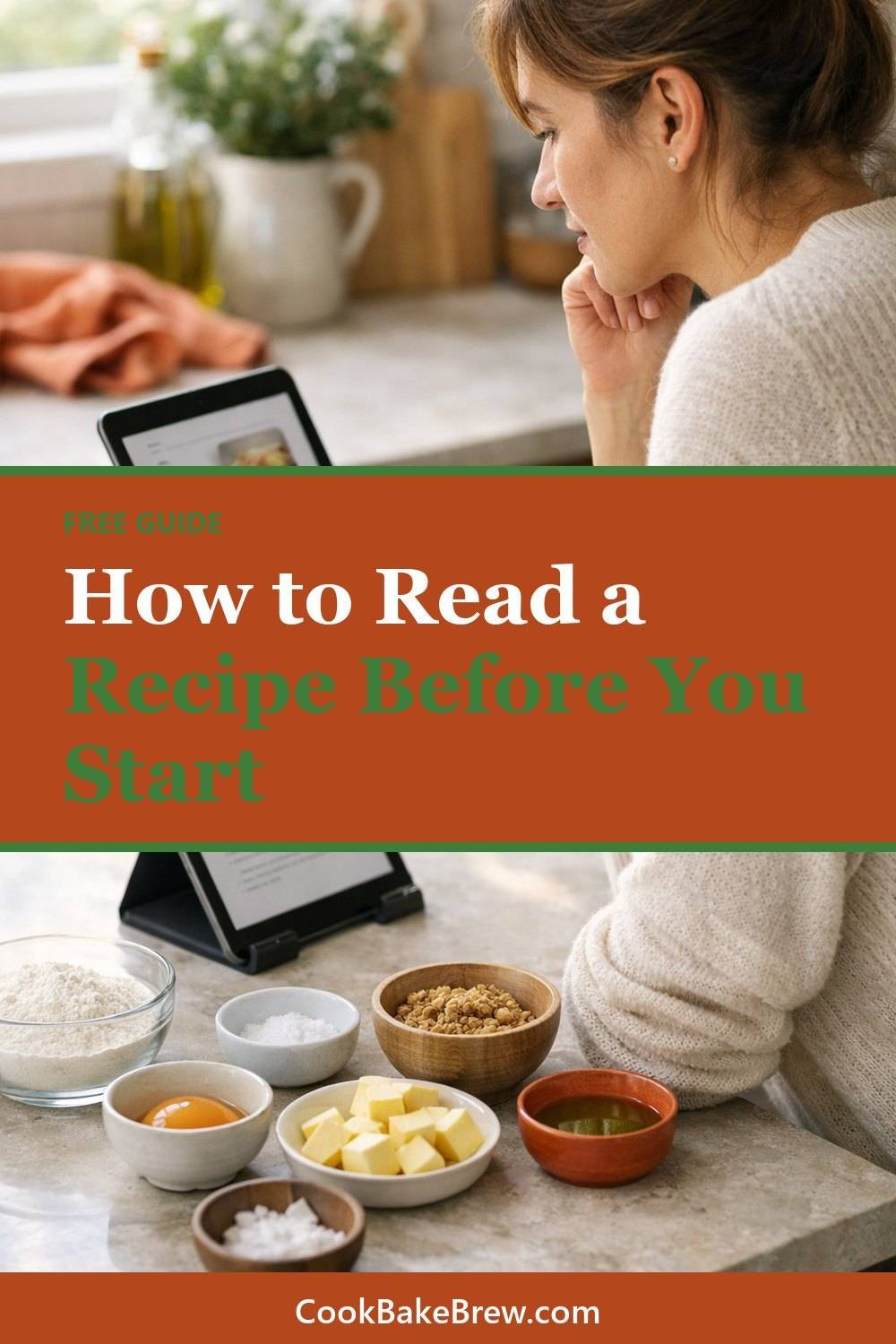
Once you've read it all, checked your stuff, and planned your time, do the prep. Chop the vegetables. Measure the spices into a little dish. Crack the eggs into a bowl. Open the cans.
Cooks call this "mise en place," which basically means "everything in its place." You don't need fancy little bowls like OXO prep bowls for it. You can use coffee mugs, saucers, and the odd cereal bowl. What matters is that when the recipe says "add the garlic and cook for 30 seconds," your garlic is already minced and waiting.
Some recipes move fast once the heat is on. Stir-fries are the classic example. If you're still chopping peppers while the onions burn, you'll know exactly why this step exists.
For slow, simple recipes, like a pot of soup that simmers for an hour, you don't always need to prep every single thing first. You can chop the next vegetable while the first one softens. But for anything quick or new to me, I prep it all.
Tip: Line up your prepped ingredients in the order you'll use them. Left to right, top of the recipe to bottom. It's a small thing that keeps you from forgetting something.
Step 7: Take notes as you go and after
Keep your pen nearby while you cook. If you swapped an ingredient, write it down. If it took 10 minutes longer than the recipe said, write that down. If it needed more salt, or less, note it.
Then, after you eat, add a line or two. Would you make it again? What would you change? Printed recipes can fill up with scribbles like "too sweet, cut sugar a bit" and "kids loved this." Those notes can be worth more than the original recipe.
If you like keeping things tidy, the Home Cook's Kitchen Journal and Recipe Log below this post is made for exactly this kind of note-taking. A plain notebook works too. The point is having your notes somewhere you'll find them again.
Tip: Date your notes. It's oddly satisfying to see how a recipe has changed over a year of making it.
Troubleshooting
I'm halfway through and just realized I'm missing something
Don't panic. Turn the heat down or off if you need a minute. Look at what the ingredient does. Is it for flavor, texture, or structure? Flavor things are often easy to skip or swap. Structure things in baking, like eggs or leaveners, are harder to replace. If you're stuck, sometimes the best move is to pause the dish and finish it later.
The times in the recipe don't match what's happening
Ovens and stoves vary a lot. Trust the description over the clock. If the recipe says "until golden" and it's still pale at the stated time, keep going and check often. Write down what worked for you so next time you'll know.
The recipe is confusing or badly written
It happens. Some recipes leave out steps or list ingredients that never show up in the method. Read it twice and try to fill in the gaps with common sense. If it's still a mess, it might be worth finding a clearer version of the same dish.
I keep forgetting to read a recipe first
Habits take a while. A simple checklist on the fridge can help: read it all, check ingredients, check times, check tools, prep. The Kitchen and Cooking Planner and Checklist Bundle below this post has something like that, if you'd rather not make your own.
Tools that make reading and prepping a recipe easier
You don't need gear to read a recipe well, but a few simple tools can make the habit stick. Here are some real options worth a look.
Paprika Recipe Manager
A good fit if you like keeping recipes in one place and want to jot notes on them. Check which devices you use, since apps like this can be sold separately per platform.
AnyList
Suits people who want a shared shopping list for the missing-ingredient moment. Check whether the features you want, such as recipe saving, sit behind a paid plan.
Pyrex Glass Measuring Cups
Handy for measuring wet ingredients and for holding prepped items while you cook. Check the sizes you need and whether the markings are easy for you to read.
OXO Good Grips Prep Bowls
A nice option if you want proper little bowls for mise en place instead of mugs. Check that the set's sizes suit the amounts you usually measure, and that they fit in your cupboard.
ThermoPro Kitchen Timer
Useful when a recipe has several timed steps and you want a reminder you can't miss. Check that it is easy to read and that the volume works in your kitchen.
Post-it Notes
A cheap way to jot a shopping list or flag a tricky step right on the recipe page. Check that the ones you pick stick well to the paper or cookbook page you use.
Check current plans and prices on each brand's own site before you choose.
FAQ
Do I really need to read a recipe I've made before?
Not every word, no. But a quick look at your old notes is smart, especially if it's been a while. Memory has a way of dropping the one step that matters.
How long should it take to read a recipe?
For most everyday recipes, 5 to 10 minutes is plenty, including checking your pantry. Longer or more complicated ones might take a bit more. It's still far less time than fixing a mistake.
Should I follow the recipe exactly the first time?
It's a good idea, especially with baking. That way you know what the dish is supposed to taste like before you start changing it. With cooking, small swaps are usually fine once you understand the basics.
What's the most common thing people miss?
The step most often missed is the waiting times. Chilling, resting, rising, and marinating are easy to skim past. They're also the ones that can't be rushed.
Your next step
Next time you cook, try this once. Read the whole recipe, check your stuff, and prep before the heat goes on. A simple soup is a nice place to practice, which is why I'd start with the free 3 Soup Recipe Cards you get by joining the email list. And if you want a spot to keep your notes or a checklist to stick on the fridge, take a look at the journal and planner below this post.
Printables and tools that can help
Home Cook's Kitchen Journal and Recipe Log
A 100-page journal for recipes, notes and what you cooked, in your own...
See detailsKitchen and Cooking Planner and Checklist Bundle
A printable bundle with a 30-day goal page, weekly planner and kitchen checklists for home...
See details