Kitchen Gadgets: What Is Worth It
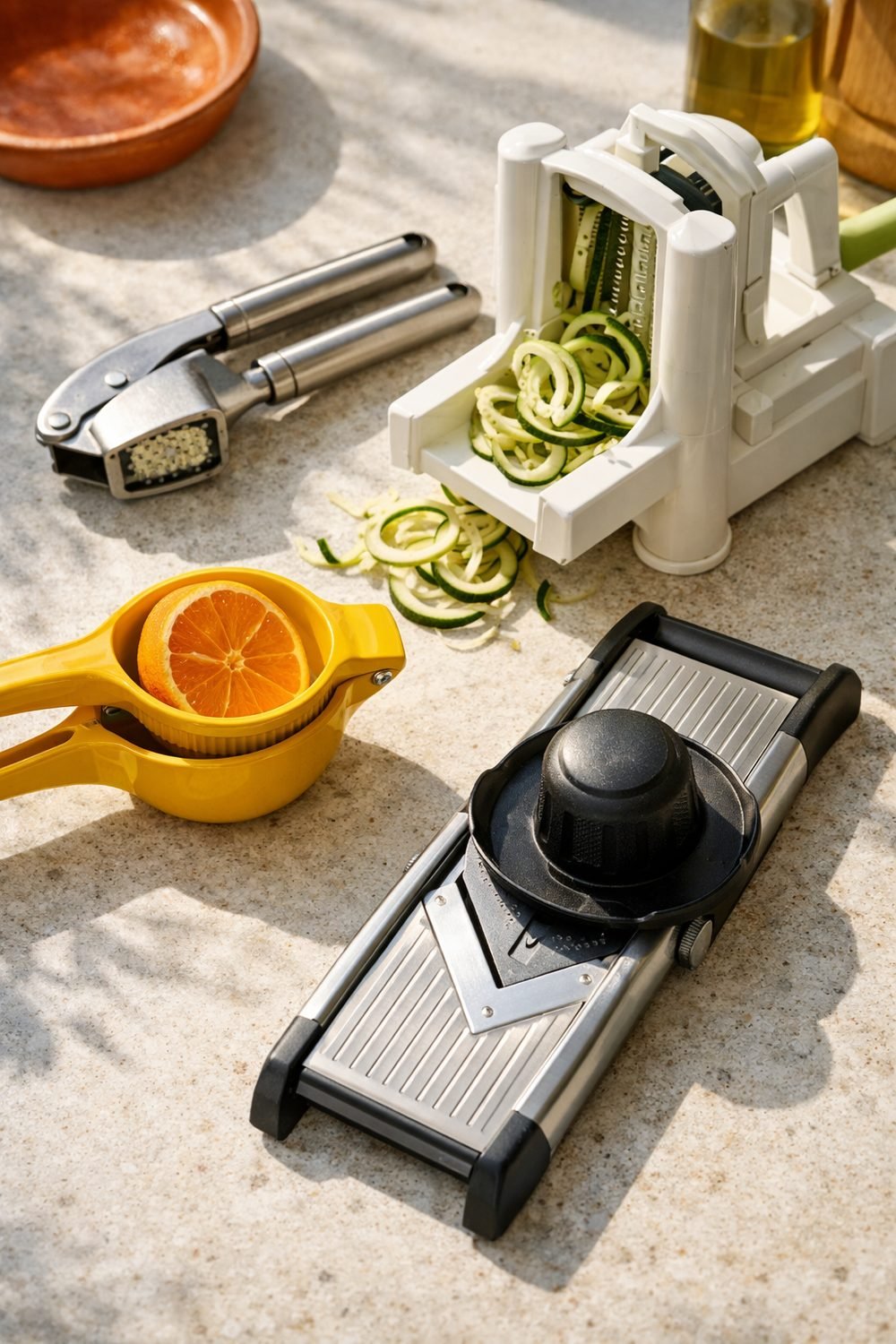
Choosing kitchen gadgets is easier when you ask what each one actually does for you. A good kitchen knife set is a useful example of a tool that can earn its place, because it covers many jobs, while single-purpose gadgets often do not. This post helps you decide what is worth buying and what to skip.
Many kitchens have a drawer that could be called the gadget graveyard. It may hold a spiralizer you used twice, an avocado slicer that does the same job as a butter knife, and a garlic press that's a pain to clean. Every one of them seemed like a great idea in the store, and I'm still learning where the best Japanese kitchen knives fit in compared with gadgets like these.
So this post is about choosing kitchen gadgets you'll actually use, from a kitchen mixer to a simple board. It isn't about buying the newest thing or filling your counter. It's about spending a little time up front so your money goes to tools that earn their spot.
Here's how I decide now, after a few years of getting it wrong.
Short on time? Our top picks: OXO Good Grips Can Opener, Victorinox Fibrox Pro Chef's Knife, Zojirushi Rice Cooker and Nordic Ware Half Sheet Pan. See all picks
Start With What You Cook to Choose a Good Kitchen Knife Set
Before you look at a single gadget, grab a piece of paper. Write down what you cooked over the last two weeks. Not what you wish you cooked. What actually happened.
When I did this, I was a little embarrassed. It's easy to picture yourself making fresh pasta on weekends. The list said scrambled eggs, sheet pan chicken, rice, soup, and toast. Lots of toast.
That list told me more than any review ever could. A KitchenAid pasta maker was clearly not for me. A good rice cooker, such as a Zojirushi, and a solid sheet pan? Those made sense.
Look for patterns in your own list:
- Which meals show up every week?
- What step in those meals annoys you or takes too long?
- Is there anything you avoid making because you don't have the right tool?
A gadget that fixes a real, repeated annoyance is usually worth a look. A gadget that fits a life you don't live yet usually isn't.
Measure Your Counter and Cupboards
This one sounds boring, and it is. It also saves a lot of regret.
It's easy to buy a kitchen mixer without measuring the space under your upper cabinets. It didn't fit. So it lived in a low cupboard, and because lifting it out was a chore, I stopped baking bread for months. The mixer was fine. Careless planning won't fit that gap.
Get a tape measure and check a few things:
- The height between your counter and the cabinets above it
- How much open counter you have after your everyday stuff is out
- Which cupboard the gadget would live in if it can't stay out
Then compare that with the size listed on the product page. If something has to be dug out from the back of a cupboard every time, be honest with yourself about how often you'll bother. For me, the answer is "almost never."
Favor Kitchen Cookware That Does More Than One Job
The gadgets I reach for most are the plain ones that handle lots of tasks. A sharp chef's knife, such as a Victorinox Fibrox Pro, is the kind of tool that makes sharp kitchen knives worth it. A sturdy kitchen board. A big pot with a lid. A sheet pan. None of them are exciting, and all of them get used daily.
Single-task gadgets aren't always bad. A good can opener, like one from OXO Good Grips, does one thing and I'd hate to lose it. But I'm careful with tools built for one food, like egg separators or strawberry hullers. Most of the time, your hands or a spoon can do the job.
Air fryers are a good example of a gadget people argue about. Some folks use theirs every day for vegetables, leftovers, and frozen foods. Others find it's just a small oven that takes up counter space. Which camp you're in depends on how you cook. If you're weighing one up, the Air Fryer Buyer's Guide and Comparison Sheets below this post can help you line up the options side by side and think it through.
Try a quick test: can you name at least three different meals you'd use this for in a normal week? If I can't, I usually pass.
Find Out How You Clean It
Here's the part nobody thinks about in the store. Every gadget you buy is also something you'll have to wash.
Some garlic presses have tiny holes that trap bits of garlic. Cleaning it took longer than just chopping the garlic with a knife. So I stopped using it. Same story with a juicer that had six parts and a mesh screen I needed a brush for.
Before you buy, look at the care instructions on the seller's page. Some questions worth asking:
- Which parts are dishwasher safe, if any?
- How many pieces come apart?
- Are there small gaps, blades, or screens that trap food?
- Does the outside need special care, like wiping only?
If cleaning looks like a project, picture yourself doing it on a tired Tuesday night. That picture tells you a lot.
By the way, if you'd like something simple to cook this week, you can grab my Free 3 Soup Recipe Cards by joining the email list.
Give It a Week Before You Buy
Most of my gadget regrets came from buying on the spot. A video made something look easy, or a sale made it feel urgent. A week later, I'd have forgotten I wanted it.
Try a simple rule. When I want a kitchen gadget, I write it down and wait seven days. During that week, I notice every time I would have used it.
Sometimes I find myself thinking about it again and again. "I'd use a kitchen blender right now for this soup." That's a good sign. Other times, the week passes and I never think of it once. That's my answer too.
This one habit can keep more clutter out of your kitchen than almost anything else. It also takes the pressure off sales, even a KitchenAid Black Friday deal, because there's almost always another one.
Read the Seller's Page Carefully
Product details change. Sizes get updated, parts get redesigned, and what was true in a review from last year might not be true now. So I always go back to the seller's own page before buying.
Things I check there:
- The exact size and weight
- What comes in the box, and what's sold separately
- Power needs, if it plugs in
- Care and cleaning steps
- The return policy and any warranty details
Reviews from other cooks are helpful for real-life feedback, but the seller's page is where you'll find the current facts. If something matters to you, like whether a part can go in the dishwasher, confirm it there instead of guessing.
Keep a Simple Plan for Your Kitchen Containers and Tools
Once you track what you cook and what you want to buy, your kitchen can get calmer. You aren't guessing anymore. Keep a short wish list, a note of what you already own, and a rough idea of what you'd actually use.
You don't need anything fancy for this. A notebook works. If you like having it laid out for you, the Kitchen and Cooking Planner and Checklist Bundle below this post has pages for meal planning and keeping track of your kitchen tools.
The point isn't to be strict. It's to make buying decisions with your real life in front of you.
Kitchen Tools Worth a Look
These are well-known picks that tend to earn their place in a home kitchen. Match each one to the cooking list you wrote earlier, not to what looks fun in a video.
OXO Good Grips Can Opener
Suits anyone who wants a simple, single-job tool that gets used often. Check how the handle feels in your hand and whether the parts are easy to wipe clean.
Victorinox Fibrox Pro Chef's Knife
A good fit for cooks who want one versatile knife for most daily prep. Check the blade length and weight so it feels comfortable for your hand size.
Zojirushi Rice Cooker
Suits households where rice shows up every week. Check the capacity against how many people you cook for and how much counter space you have.
Nordic Ware Half Sheet Pan
Works well for sheet pan dinners, roasting vegetables, and baking. Check that the size fits your oven and your cupboard before buying.
KitchenAid Stand Mixer
Suits people who bake bread or cakes often enough to justify a machine that takes up room. Measure your cabinet clearance and think about where it will live when not in use.
Ninja Air Fryer
Suits cooks who reheat leftovers or make frozen foods in small batches. Check the basket size and how many pieces come apart for washing.
Lodge Cast Iron Skillet
A durable all-rounder for searing, baking, and frying. Check the weight and the care steps, since cast iron needs a little upkeep.
Please check current plans and prices on each brand's own site before you decide.
FAQ
What kitchen gadgets are usually overrated?
Gadgets made for just one food tend to end up unused, like avocado slicers or banana cutters. Bulky machines that need lots of cleaning can also gather dust. It really depends on your habits, though, so check your cooking list first.
Is an air fryer worth it?
It can be if you often cook small batches, reheat leftovers, or make frozen foods. If you already use your oven a lot and short on counter space, it might not add much. Compare sizes and features on the seller's page before deciding.
How do I get rid of gadgets I don't use?
Put them in a box for a month. If you don't go looking for anything in it, consider donating or passing the items to a friend who'll use them. It feels good to get that space back.
Should I buy a gadget just because it's on sale?
A sale is only a good deal if you'd have bought the item anyway. Try the one-week wait, even during a sale. If you still want it after a week, it's probably worth getting.
Summary
The best kitchen gadgets are the ones that fit how you really cook, whether that means a pan set or a Japanese kitchen knife set. List your usual meals, measure your space, pick tools with more than one use, check how they clean, and give yourself a week before buying. Then confirm the details on the seller's page.
If you'd like an easy place to start cooking with what you already have, join the email list for the Free 3 Soup Recipe Cards. After that, take a look at the guides below this post if you want help planning your kitchen or choosing an air fryer.
Printables and tools that can help
Air Fryer Buyer's Guide and Comparison Sheets
A printable guide and comparison sheets to note what matters to you before you look at any seller...
See detailsKitchen and Cooking Planner and Checklist Bundle
A printable bundle with a 30-day goal page, weekly planner and kitchen checklists for home...
See details