Knife Safety Basics for Using a Good Kitchen Knife Set
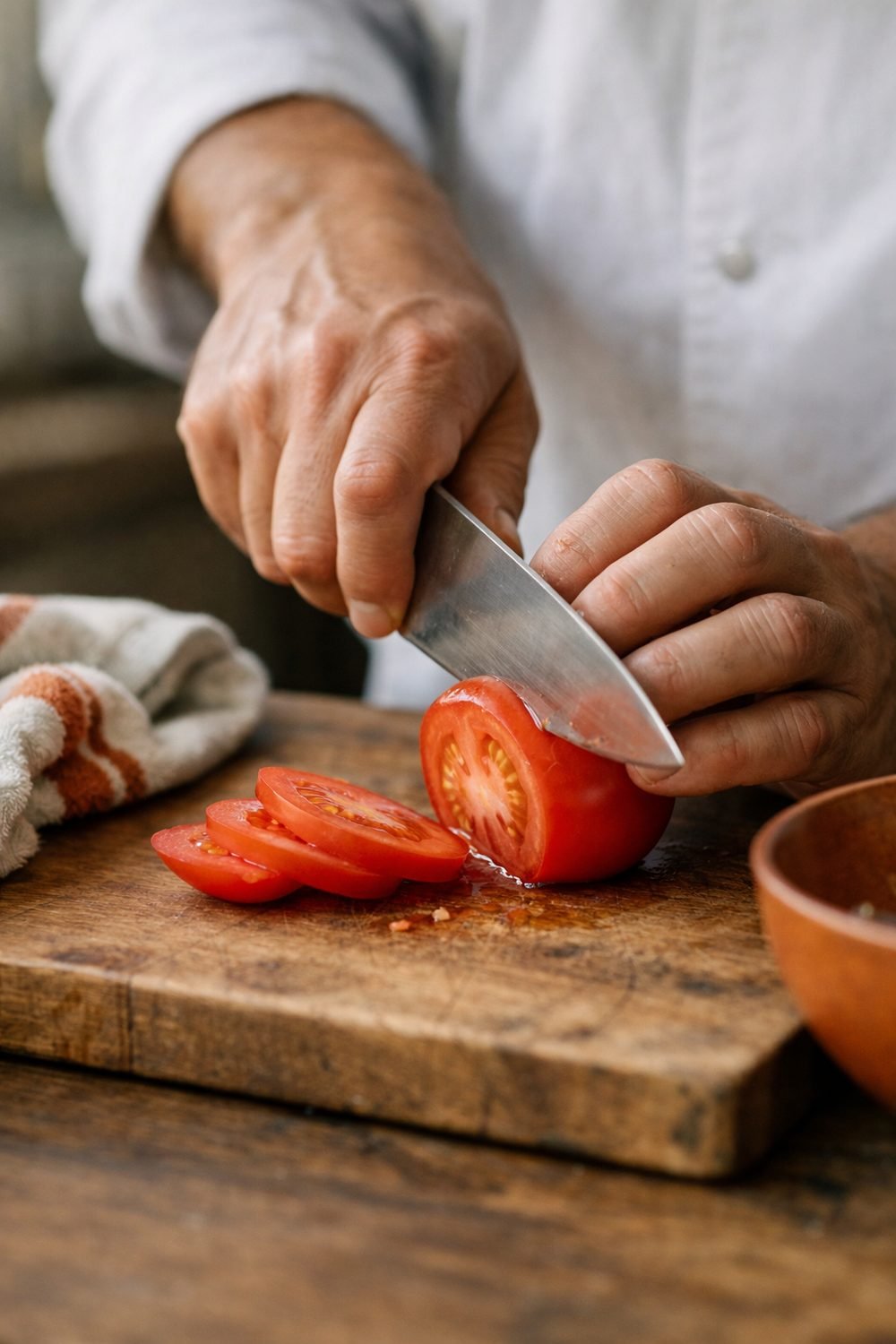
A good kitchen knife set makes cooking easier, but even the best blades can cause cuts if they are handled carelessly. These knife safety basics cover sharpening, cutting boards, hand position, carrying, washing and storage, so everyone in your kitchen can work with confidence.
Bagels cause more thumb scars than most people expect, and a tiny white mark is a common souvenir. Not a fancy knife trick, not a pumpkin. A Tuesday morning bagel, a dull bread knife, and me in a hurry. That's how most kitchen cuts happen. It isn't the scary stuff. It's the ordinary stuff, done a little too fast.
The good news is that knife safety basics aren't complicated. It's a handful of small habits that, once they stick, you stop thinking about. Here are the habits worth using every day, plus a few common mistakes to avoid.
Short on time? Our top picks: Victorinox Fibrox Pro Chef's Knife, Wüsthof Classic Knife Block Set, Shun Classic Knives and Zwilling Sharpening Steel. See all picks
Keep Your Knives Sharp, Even a Japanese Knife Set
This sounds backwards at first. Wouldn't a sharp knife be more dangerous? A dull blade needs more pressure to get through food. More pressure means more force behind it when it slips off a tomato skin or an onion's shiny outer layer. And it will slip, which is why a good tomato knife earns its place in the kitchen.
A sharp knife goes where you point it. You guide it instead of shoving it. That control is what keeps your fingers safe.
Here's a quick test I like: try slicing a sheet of printer paper held up by one corner. If the knife glides through, you're fine. If it folds or tears the paper, it's time to sharpen.
You don't need a pricey setup. A honing steel, such as the Zwilling Sharpening Steel, helps keep the edge straight between sharpenings, and a basic sharpener or a local sharpening service can handle the rest. Follow the instructions that came with whatever tool you buy, since different knives and sharpeners work a little differently.
Give Yourself a Stable Cutting Board
A board that slides around is a problem waiting to happen. You're pushing down on a knife, the board scoots an inch, and suddenly your hand is somewhere it shouldn't be.
The fix costs nothing. Wet a paper towel or a thin kitchen towel, wring it out, and lay it flat under your board. It grips the counter and holds the board in place. Some people use a cheap rubber shelf liner instead, which works just as well.
The food matters too. Round things like potatoes, carrots, and onions love to roll. Cut a thin slice off one side first so you've got a flat base, then set it down on that flat side. It feels like a small step, but it's one of the habits I'd tell any new cook to learn first.
Glass and marble boards look pretty, but I'd skip them. They're slippery, and they're hard on your knife's edge, which takes you right back to the dull knife problem.
Cut Away From Your Body and Mind Your Other Hand
Always point the blade away from you. If the knife slips, you want it heading toward the board or the counter, not your stomach or your lap. This is especially true with small paring knives, where it's tempting to peel an apple toward your thumb like a grandparent might. Lots of people do it. It usually isn't worth the risk.
Your other hand needs a job too. The "claw grip" is the one to use:
- Curl your fingertips under, like you're gently holding a ball.
- Rest your knuckles against the flat side of the blade.
- Move your hand back slowly as you slice, letting your knuckles guide the knife.
It feels clumsy for the first week. Then one day you notice you're doing it without thinking. That's when you know it stuck.
And slow down. Nobody's timing you. Those fast chopping videos online are made by people with years of practice, and honestly, speed is overrated at home.
Carry Knives Like You Mean It
Kitchens get busy. Kids wander in, the dog follows you around, someone opens the fridge right as you turn. Walking with a knife is when a lot of accidents happen.
When you need to move a knife, hold it at your side with the tip pointing down and the sharp edge facing back, away from where you're walking. If someone's nearby, say "knife" or "behind you" out loud. It sounds a bit dramatic until you've had a near miss.
Never try to catch a falling knife. Your hands will want to grab it. Let it fall, step back, and pick it up after. A dent in the floor is a lot easier to deal with than a cut palm.
If you're picking up some new habits like this, I put together a set of free recipe cards for anyone who joins my email list, the Free 3 Soup Recipe Cards, and soups are a nice low-stress way to practice your chopping.
Wash Knives by Hand, One at a Time
Please don't drop knives into a sink full of soapy water. You can't see them under the bubbles, and reaching in blind is how people get hurt. This one is often learned the hard way, such as reaching into a sink and finding a chef's knife under the suds.
What I do instead:
- Wash the knife right after using it, or set it aside on the counter, away from the edge, until you can.
- Hold it by the handle with the blade pointing away from you.
- Wipe the sponge or cloth along the spine side, moving from handle to tip, never across the edge.
- Rinse and dry it right away with a towel, using the same careful motion.
What about the dishwasher? Many knife makers suggest hand washing, since the heat and rattling can dull edges or damage handles. Check the care info for your specific knife to see what the maker recommends.
Store Your Good Kitchen Knife Set Where Edges Stay Covered
The loose knife drawer is a classic. You reach in for a spatula and meet a blade instead. If that's your setup right now, no judgment. Mine looked like that for years.
Better options include a wooden knife block, such as the Wüsthof Classic Knife Block Set, or one of these:
- A knife block on the counter, which keeps blades separate and handles easy to grab.
- A magnetic strip on the wall, mounted out of reach of small kids.
- Blade guards or sheaths, which are great if you really want to keep knives in a drawer.
- An in-drawer knife tray with slots for each knife.
Pick whatever fits your kitchen. The goal is simple: no bare blades mixed in with other stuff.
Small Habits That Add Up
A few extra things I'd mention, because they come up more often than you'd think. Keep your workspace tidy, since clutter crowds your hands. Dry your hands before you grab a knife; a wet handle is a slippery handle. Use the right knife for the job, too, whether that's a chef knife set staple or a Japanese vegetable knife. A big chef's knife on a tiny garlic clove feels awkward, and a little paring knife on a butternut squash is asking for trouble. A best Japanese chef knife is a joy, but it still needs the same care.
If you like having routines like these written down, the Kitchen and Cooking Planner and Checklist Bundle below this post has space for prep checklists, which is how I keep my own habits from slipping on busy nights. And if you're newer to cooking in general, The Confident Home Cook Starter Guide, also below, walks through more of the basics in a friendly way.
For any real cut, especially a deep one or one that won't stop bleeding, please get proper medical help. This advice comes from a home cook's perspective, not a medical professional's.
Gear That Makes Knife Safety Easier
You don't need much to put these habits into practice, but a few well-known tools do make it simpler. Here are some real options to consider, with a note on what to check before you choose.
Victorinox Fibrox Pro Chef's Knife
A widely known, no-fuss chef's knife that suits home cooks who want one dependable all-rounder. Check the blade length and handle feel in your own hand, since comfort and control matter more than looks.
Wüsthof Classic Knife Block Set
A classic option for people who want several knives and a built-in storage block in one purchase. Check which knives are included, since some sets come with pieces you may never use.
Shun Classic Knives
A well-known Japanese-style line that suits cooks who like a thin, precise blade. Check the care instructions first, as these knives usually call for gentle hand washing and careful storage.
Zwilling Sharpening Steel
A honing steel suits anyone who wants to keep an edge straight between proper sharpenings. Check that the steel is long enough for your biggest knife and that it works with your blade type.
Chef'sChoice Knife Sharpener
An electric sharpener line that suits people who want a simple, guided way to sharpen at home. Check which blade styles it supports, especially if you own Japanese knives with a different edge angle.
OXO Good Grips Cutting Board
A familiar kitchen brand whose boards suit cooks who want a steady work surface that is easy to clean. Check for non-slip edges or feet, and still use a damp towel underneath if it moves.
Cut-Resistant Gloves by NoCry
These suit beginners, kids' helpers, or anyone nervous about slicing and mandoline work. Check the cut-resistance rating and sizing, and remember a glove is a backup, not a replacement for good technique.
Check current plans and prices on each brand's own site before you buy.
FAQ
How often should I sharpen my knives?
It depends on how much you cook and what you cut. Try the paper test every few weeks, and hone your knife more often to keep the edge straight. Your knife maker's care guide is the best place to check for your specific blade.
Is a wooden or plastic cutting board safer?
Both can work well as long as they sit flat and don't slide. Wood tends to be gentler on knife edges, while plastic is easy to clean. Avoid glass or stone boards, since they're slippery and dull your knives quickly.
What's the safest way to let kids help with cutting?
Start them with soft foods and a kid-friendly knife, and stay right next to them. Teach the claw grip early and keep sessions short so they don't get tired and sloppy. Every child is different, so go at whatever pace feels right for yours.
Can I really never put knives in the dishwasher?
Some knives are labeled dishwasher safe, but many makers recommend hand washing to protect the edge and handle. Check the care info for your knife. When in doubt, hand washing is the cautious choice.
Quick Recap
Keep your knives sharp, steady your board, and cut away from yourself with your fingers curled in. Carry knives pointed down, wash them one at a time, and store them so no edge is loose. None of it takes long, and after a couple of weeks it just feels normal.
If you'd like something easy to practice on, grab the Free 3 Soup Recipe Cards by joining the email list. Then take a look at the Kitchen and Cooking Planner and Checklist Bundle and The Confident Home Cook Starter Guide below this post, if either one sounds like it would help in your kitchen. Happy chopping, and go slow with those bagels.
Printables and tools that can help
Kitchen and Cooking Planner and Checklist Bundle
A printable bundle with a 30-day goal page, weekly planner and kitchen checklists for home...
See detailsThe Confident Home Cook Starter Guide
A plain-English starter guide for beginners in the kitchen. General information...
See details