Pantry Staples Checklist and Food Storage Containers

A well-stocked pantry starts with a simple list, and the right food storage containers for pantry shelves help keep those staples fresh and easy to find. This checklist walks through the basics, from grains and canned goods to oils, spices and baking supplies.
A stocked pantry makes dinner so much easier, and a simple pantry staples checklist keeps it that way. It's easy to learn this the hard way, standing in the kitchen at 7pm with a chicken breast, half an onion, and nothing else to work with. These days I keep a small set of basics on hand, stored in the best pantry storage containers I could find, and most nights I can pull something together without a trip to the store.
This isn't a list of fancy ingredients. It's what I actually use, week after week, plus a few things I've stopped buying because they just sat there. Take what fits your kitchen and skip the rest.
Short on time? Our top picks: OXO Good Grips POP Containers, Rubbermaid Brilliance, Pyrex Glass Storage and Cambro Food Storage Containers. See all picks
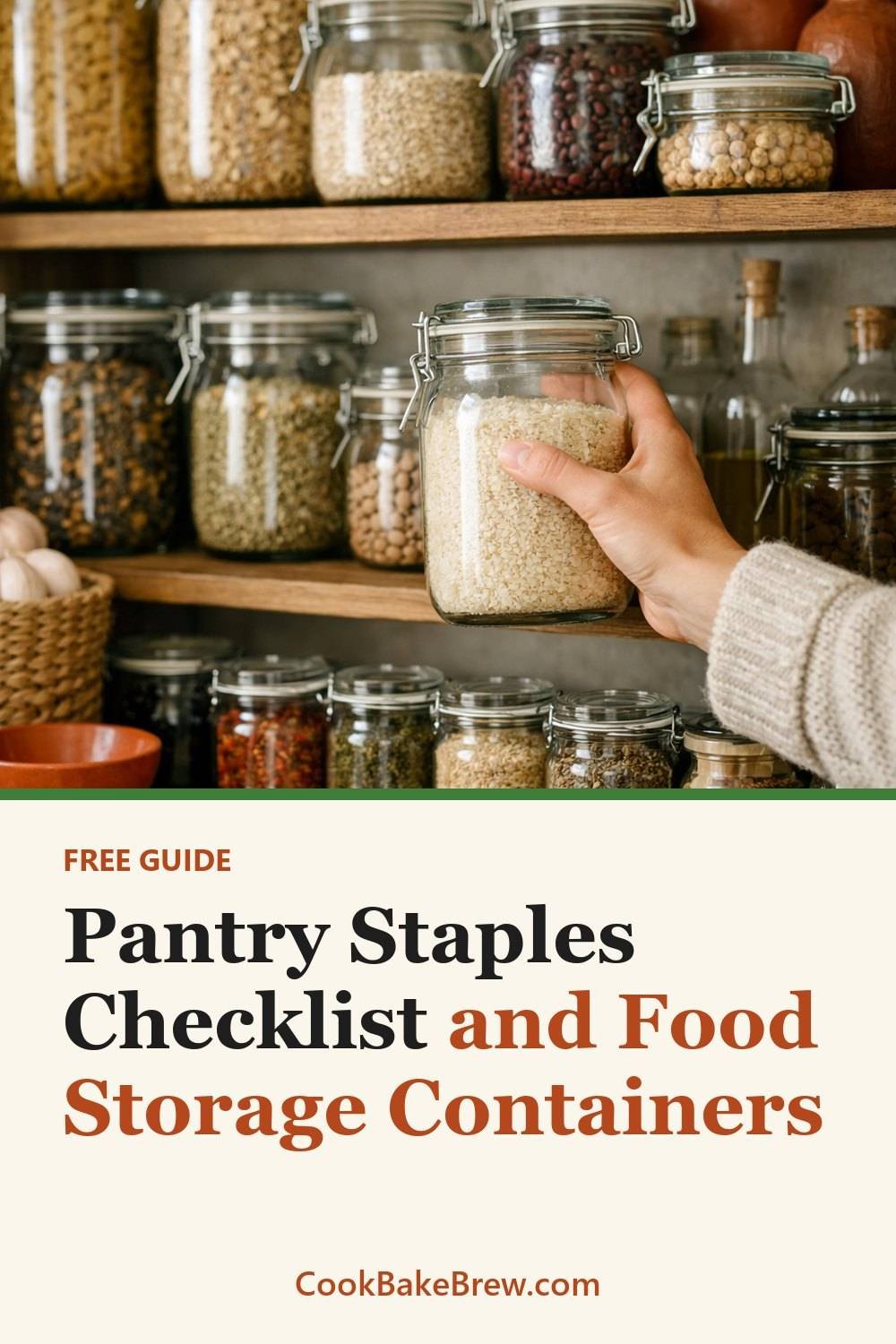
1. Grains: Rice, Pasta and Oats
If you only stock one category, make it this one. Rice, pasta and oats are cheap, they keep for a long time, and they turn a few odd leftovers into an actual meal. Good basics are long-grain white rice, one or two pasta shapes, and a big container of rolled oats.
You don't need six kinds of pasta. Many people buy every pasta shape that looks fun, and most of them go stale before the box is finished. Now I keep spaghetti and one short shape like penne. That covers almost everything I make.
Tip: Move rice and oats into glass pantry storage containers with tight lids, such as Pyrex glass storage, once you open the bag. Good pantry containers keep out moisture and pantry bugs, and you can see at a glance when you're running low.
2. Canned Beans
Canned beans are my backup protein. Chickpeas, black beans and white beans work in soups, salads, tacos and quick pasta dishes. Rinse them, warm them with garlic and olive oil, and you've got the start of dinner.
Dried beans are cheaper, and I do cook them sometimes on a slow Sunday. But on a busy Tuesday, nobody's soaking anything. Keep a few cans around even if you also buy dried.
Tip: Buy two of whatever you use most. When you open one, the other is still there, and that's your reminder to add it to the grocery list.
3. Tomatoes in Cans and Jars
Crushed tomatoes, diced tomatoes and a small can of tomato paste do a lot of heavy lifting. They're the base for pasta sauce, chili, shakshuka and plenty of soups. These are often a better choice than a jar of ready-made sauce, because you can season them however you want.
Tomato paste is the one people forget. A spoonful stirred into a pan with onions adds a deep, rich flavor. The problem is you rarely use a whole can.
Tip: Freeze leftover tomato paste in spoonfuls on a plate lined with parchment, then drop the frozen bits into a bag. Or buy it in a tube, which keeps in the fridge for a good while after opening. Check the label for how long.
4. Oils and Vinegars
A few basics really are enough here. Keep a neutral oil for high-heat cooking and baking, plus olive oil for salads and finishing dishes. For vinegar, apple cider vinegar and red wine vinegar are the two most useful to keep on hand.
Honestly, the fancy flavored oils are overrated, at least for everyday cooking. Gift sets are a common trap, since you may use one or two blends a couple of times while the rest go cloudy in the back of the cupboard. A splash of plain vinegar does more for a flat soup or a boring salad than most specialty bottles.
Tip: Keep oils away from the stove. Heat and light make them go off faster. A cool, dark cupboard is better than the handy spot right next to the burners.
5. Spices: Start With Five
Spice racks with thirty jars look nice, but you'll end up with a lot of dusty little bottles. Start with five you'll actually use. Mine are salt, black pepper, garlic powder, ground cumin and paprika (smoked, if you like a bit of warmth).
With those five you can season roasted vegetables, beans, chicken, eggs and most soups. Once you notice yourself wanting a flavor you don't have, like cinnamon for oatmeal or chili flakes for pasta, add it. Your spice shelf grows from your real cooking, not from a store display.
Tip: Write the month you opened a spice on the lid with a marker. Ground spices lose flavor over time, and this makes it easy to tell which ones are getting tired.
If you like simple, pantry-friendly cooking, you can grab my Free 3 Soup Recipe Cards when you join the email list, and all three lean on the staples in this post.
6. Baking Basics
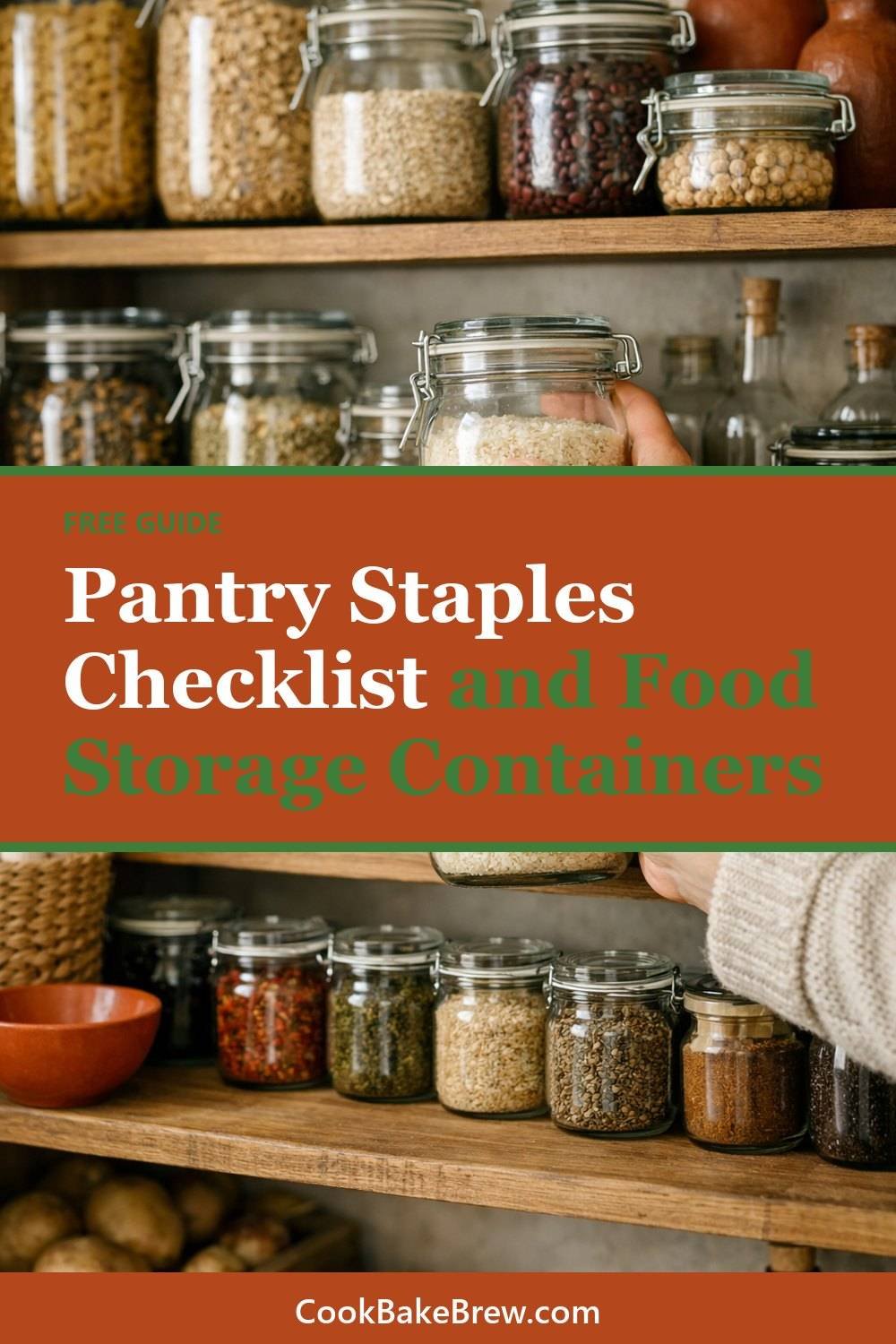
Flour, sugar, baking powder and baking soda are the core. Add salt (you already have it) and vanilla extract, and you can make pancakes, muffins, quick bread and cookies without a special trip. Stock all-purpose flour and both white and brown sugar.
Baking powder and baking soda are not the same thing, and they are easy to mix up when you're starting out. Label them clearly. Baking powder also loses strength over time, which is why some of my early muffins came out flat and dense.
Tip: To test baking powder, drop a little into hot water. If it fizzes, it's still good. If it just sits there, replace it.
7. Broth and Stock
This wasn't on my original list, but I reach for it constantly. A carton of chicken or vegetable broth turns rice into something tastier, gives you the start of a soup, and helps loosen a pan sauce. Bouillon cubes or paste take up even less space.
Low-sodium versions, like those from Swanson, give you more control, since you can always add salt but you can't take it out. Once a carton is open, it goes in the fridge and needs to be used within a few days, so check the package.
Tip: If you won't finish an open carton in time, pour the rest into an ice cube tray and freeze it. Those little cubes are perfect for deglazing a pan.
8. A Few Flavor Boosters
These are the small things that make plain food taste like you tried. Soy sauce, honey, mustard, hot sauce and peanut butter are the ones I'd miss most. None of them are exciting on their own, but together they cover sweet, salty, sharp and spicy.
You can skip buying lots of bottled marinades and dressings. They take up a lot of room, and you can mix most of them yourself with oil, vinegar, mustard and a little honey in about a minute.
Tip: Some of these need the fridge after opening. Read the label on each one, since it varies by brand.
9. Check Dates and Rotate Pantry Stock in Food Storage Containers
A pantry only helps if you can find things and they're still good. When I unpack groceries, I put the new cans and boxes at the back and slide the older ones forward. It takes an extra minute and saves me from finding a can of beans that's been hiding for years.
Every month or two, I do a quick look-through. Toss anything that's off, note what's running low, and wipe the shelves. It's a good time to plan a meal around whatever needs using up.
Tip: Keep a running list on the inside of the pantry door or on your phone. If you'd rather have it on paper, the Kitchen and Cooking Planner and Checklist Bundle below this post has printable pages for tracking what you've got.
Pantry tools and storage worth a look
A few good containers and tools make a pantry easier to keep up. Here are some well-known options that fit the staples in this checklist.
OXO Good Grips POP Containers
These are airtight, stackable containers that suit anyone who wants to decant rice, oats, flour and sugar. Check which sizes fit your shelf depth and whether you want to buy a set or add pieces one at a time.
Rubbermaid Brilliance
A clear, stackable storage line that suits people who want to see what is left at a glance. Check the lid seal and whether the shapes stack well on your shelves.
Pyrex Glass Storage
Glass containers with lids suit people who prefer to avoid plastic for dry goods and leftovers. Glass is heavier and can break, so think about where you will reach for it.
Cambro Food Storage Containers
These clear, sturdy containers are popular with home cooks who buy flour and sugar in bulk. Check that the size suits your bag of flour and whether you need extra lids.
Swanson Broth
A familiar shelf-stable broth that suits cooks who want a quick base for rice and soups. Check the label for sodium level and how long an opened carton keeps in the fridge.
Bonne Maman Pantry Labels?
Skip this one.
Brother P-touch Label Maker
This suits anyone who wants clear labels on jars, from baking soda to spices. Check which tape sizes and colors you need before buying.
Please check current plans and prices on each brand's own site.
FAQ
How much should I stock at once?
Start small with your pantry staples checklist. One or two of each item is plenty for most households, and you can build up as you learn what you actually use. Buying in bulk only saves money if you finish it.
Do pantry staples really go bad?
Many last a long time, but they don't last forever. Spices lose flavor, oils can turn rancid, and flour can go stale. Check the dates and trust your nose.
What are the best food storage containers for a tiny pantry?
Focus on the items you use every week and skip the extras, then pick food storage containers for pantry shelves that stack neatly. Clear, stackable pantry organization containers help a lot, and a shelf riser can double your space for cans. Even one cupboard can hold a useful set of basics.
Is it cheaper to keep a stocked pantry?
It can help you avoid last-minute takeout and extra store trips, but it depends on your habits. The real win for me is fewer "what's for dinner" moments. Plan meals around what you have so nothing goes to waste.
Your Next Step
You don't have to buy everything this weekend. Pick one section, check what you already have, and fill the gaps on your next shopping trip. Then sign up for the email list to get your Free 3 Soup Recipe Cards, so you have something easy to cook with your new staples. If planning is the hard part for you, take a look at the Weekly Meal Planner and Grocery List Pack and the other planner below this post.
Printables and tools that can help
Kitchen and Cooking Planner and Checklist Bundle
A printable bundle with a 30-day goal page, weekly planner and kitchen checklists for home...
See detailsWeekly Meal Planner and Grocery List Pack
Printable weekly meal planner pages and grocery...
See details