Single Cup Coffee Maker With Grinder: A Buyer's Guide
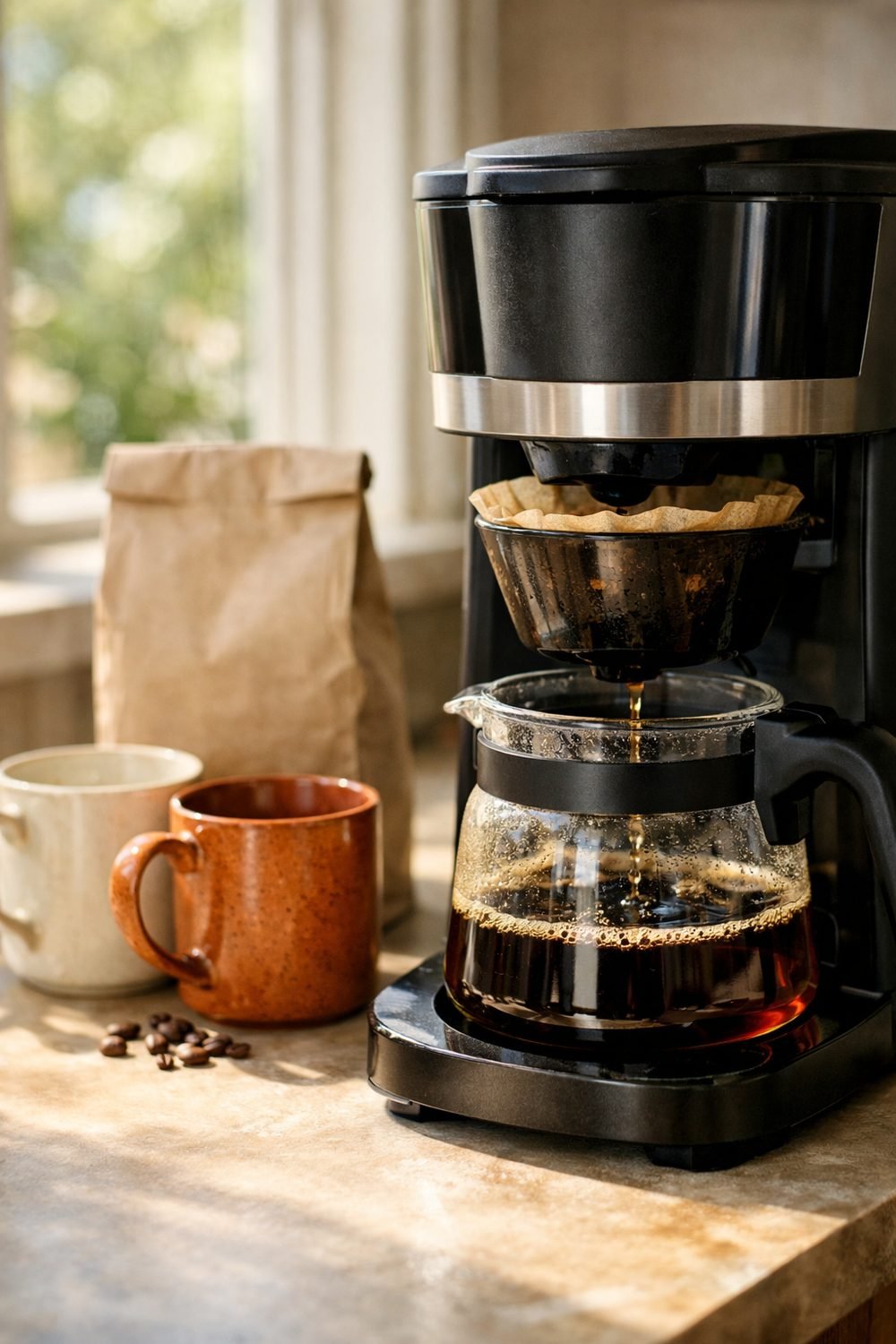
A single cup coffee maker with grinder promises fresh coffee at the press of a button, but the right one depends on how many cups you drink, how much counter space you have, and how much cleaning you are willing to do. This guide walks through what to check before you buy.
Many people buy their first small coffee maker in a hurry. It was on sale, it looked nice in the box, and I figured a coffee maker is a coffee maker. Some buyers find out too late that a machine doesn't fit under their cabinets, makes far more coffee than they drink, or has a water tank that's hard to reach for cleaning. A common mistake is sticking with a poor fit out of stubbornness instead of replacing it or passing it along.
Coffee makers differ in size and style a lot more than the store shelf makes it seem, and a small coffee maker isn't always the simple choice it looks like. The good news is that you don't need to be a coffee expert to pick a good one. You just need to answer a few plain questions about how you actually live. How much coffee do you drink? Where will the machine sit? And how much cleaning are you honestly willing to do?
That's what this guide covers. Cups, counter and cleaning. Get those three right and almost any decent machine will make you happy.
Short on time? Our top picks: Mr. Coffee, Cuisinart, Breville and Keurig. See all picks
Coffee maker buyer's guide: what to check, in short
- Count your real cups. Think about a normal weekday, not the one time your in-laws visited.
- Measure your counter and the space under your cabinets before you shop. Height is the one that catches people.
- Pick the type that matches your mornings: drip for a pot, single-serve for one cup at a time, pour-over or French press if you like a slower routine.
- Thermal carafes keep coffee warm without a hot plate. Glass carafes are cheaper and easier to see into, and they're easy to find on a white coffee maker too.
- Look at how the tank, basket and carafe come apart. If you can't clean it easily, you won't.
- Skip features you won't use. A programmable timer is great if you'll set it. If you won't, it's just more buttons.
- Read the seller's page for cleaning and descaling instructions before you buy, not after.
Start With Your Cups, Not the Small Coffee Maker
This is the part most people skip, and it's the part that matters most. A machine that makes the wrong amount of coffee is annoying every single day.
What a "cup" means on the box
Here's something that confused me for years. When a coffee maker says it makes 12 cups, it usually doesn't mean 12 big mugs. Many brands measure a "cup" as a smaller amount than what fits in a normal mug. So a 12-cup machine might fill far fewer of your actual mugs than you'd expect.
Every brand does this a little differently, so check the product page or the manual for how they define a cup. Then grab your favorite mug, fill it with water, and pour it into a measuring cup. Now you know what you really drink. It takes one minute and saves a lot of guessing.
One person, two people, or a house full
Here's how I'd think about it:
- You drink one mug and you're out the door. A single-serve machine like a Keurig, a small drip maker, or a French press makes sense. Brewing a full pot to drink one mug wastes coffee and you'll end up pouring it out.
- Two of you, a mug or two each. A small to mid-size drip maker is the sweet spot. Many let you brew a half pot.
- A family, or you host often. A full-size drip maker with a big carafe. A thermal one is worth looking at here, since coffee might sit for a while.
Your drinking pattern matters too
Do you drink it all at once, or sip it over three hours? That changes things. If you're a slow sipper, coffee sitting on a hot plate for hours starts to taste burnt and bitter. It's easy to spend a long time assuming you just don't like the coffee you're buying. It was the hot plate. A thermal carafe, or brewing smaller batches, fixed it.
Measure Your Counter Before You Fall in Love
Grab a tape measure. Seriously. This is where my first machine went wrong.
Height is the sneaky one
Width is easy to picture. Height is not. A lot of kitchens have cabinets hanging above the counter, and the gap is smaller than you'd think. Measure from the counter to the bottom of the cabinet.
Then think about how you fill the machine. Many drip makers have a lid that flips up on top so you can pour in water. If the lid needs room to open and you don't have it, you'll be sliding the machine out every morning. That gets old fast. Some machines have a removable water tank on the side or back, which can solve this. Look for that detail on the product page.
Depth and the outlet
Measure how deep your counter is, too, and where your outlets are. A deep machine pushed against the wall can stick out past the counter edge. A short cord might not reach the outlet you want to use. Neither is a big deal once you know, but both are irritating to discover on day one.
Where it will actually live
Picture your morning. Is the machine near the sink so filling it is easy? Is it near where you keep mugs and coffee? Moving the machine closer to the sink can make mornings smoother. Small thing. Felt big.
If your counter is tiny, a French press or pour-over cone can live in a cupboard and come out only when you need it. That's a real advantage that doesn't show up in any feature list.
The Main Types, Side by Side
There are lots of coffee makers out there, but most fall into a few groups. Here's how they compare in plain terms.
Drip coffee makers
The classic, and the style you'll see in most a cafe coffee maker setup. You put grounds in a basket with a filter, add water to the tank, press a button, and coffee drips into a carafe. They're easy, they make a lot at once, and they're forgiving if you're half asleep.
Good for: people who want a pot, families, folks who like setting it and walking away. Downside: they take up a fair bit of space, and cheap ones can brew unevenly.
Single-serve pod machines and coffee makers that use K-Cups
You pop in a pod, press a button, and get one cup. Fast and tidy. The appeal is clear, especially for someone who wants one cup and zero fuss.
My honest take? The convenience is real, but the pods add up over time, and they create a lot of trash. Some machines work with reusable pods you fill yourself, which helps. If you're thinking about this type, check the seller's page for which pods it takes and whether reusable ones are an option.
French press
A glass or metal jug with a plunger. You add coarse grounds and hot water, wait a few minutes, then press down. No electricity needed beyond a kettle. The coffee is rich and full.
It's simple and small. But you'll get a bit of sediment at the bottom of your cup, and some people hate that. Some people don't mind it. You can simply stop drinking before the last sip.
Pour-over
A cone that sits on your mug or a carafe. You add a filter and grounds, then slowly pour hot water over them. It's a little ritual. Some mornings you may love it. Other mornings, when you're running late, you may not have the patience.
Pour-over gives you a clean cup and lots of control, and it's a good way to make iced coffee if you don't own a Mr. Coffee iced coffee maker. It takes more attention than a drip machine. If you want something you can ignore while you pack lunches, this isn't it.
Espresso machines
These are a whole different thing. They make strong, small shots, and many people use them for lattes and cappuccinos. They take more learning, more space, and usually more cleaning. Only go this route if you know you love espresso drinks and you're ready to practice a bit. It's not a good "just in case" purchase.
A quick example
Picture someone who lives alone, drinks one cup before work, and has a small apartment kitchen. A full-size drip maker would have been a waste for her. She went with a pour-over cone she keeps in a drawer and a kettle she already owned. Now picture a household with four kids and two coffee drinkers. She runs a big drip machine with a thermal carafe every morning and never thinks about it. Same goal, very different answers.
Glass Carafe or Thermal Carafe?
This one comes up a lot with drip machines, so it gets its own section.
Glass carafes
A glass carafe usually sits on a hot plate that keeps the coffee warm. You can see how much is left, and they're often cheaper. The catch is that hot plate. Leave coffee on it too long and it starts to taste stewed. Glass can also break, for example if it slips out of soapy hands into the sink.
Thermal carafes
A thermal carafe is insulated, a bit like a travel mug. There's no hot plate, so the coffee stays warm without cooking. You can also carry it to the table or out to the porch. The downsides: you can't see inside, and the narrow opening can be harder to clean.
Which one I'd pick
If you drink your coffee quickly, glass is fine and saves money. If coffee sits around in your house, I'd lean thermal. Some people switch and never look back, though that works best if you drink slowly. Your habits decide this, not mine.
Single Cup Coffee Maker With Grinder Features: What's Worth It and What's Overrated
Coffee makers love a long feature list. Some features earn their spot. Others are mostly there to look good on the box.
Features I think are worth it
- A programmable timer, if you'll actually use it. Waking up to coffee already made is lovely. Be honest about whether you'll set it each night.
- Brew-pause, which lets you grab a cup mid-brew. If you're impatient in the morning, you'll use this daily.
- Small-batch setting on bigger machines, so a half pot doesn't taste weak.
- Auto shut-off, for peace of mind when you leave the house wondering if it's still on.
- A removable water tank, especially if your cabinets are low.
Features I'd skip or not pay extra for
Fancy screens with lots of modes. App connections that let you start your coffee from your phone. A dozen strength settings you'll set once and forget. None of these are bad, exactly. Many people stop using them after the first week. If two machines are close and one has these extras for more money, I'd usually take the simpler one.
Built-in grinders are a mixed bag. Fresh-ground coffee really does taste better. But a grinder inside the machine is one more part to clean, and if it breaks, the whole machine might be out of action. A separate grinder, such as one from OXO, gives you more flexibility. That's just my opinion, though, and plenty of people love their all-in-one.
Quick side note: if you're the type who likes a cozy kitchen routine, you might enjoy our Free 3 Soup Recipe Cards, which you can get by joining the email list in the box on this page.
Cleaning Your Coffee Maker: The Part Nobody Wants to Think About
To be blunt: If a coffee maker is hard to clean, you'll clean it less, and your coffee will taste worse. Old oils and mineral buildup make coffee bitter and flat. Before you buy, spend a few minutes figuring out what cleaning will look like.
Daily cleaning
This should be quick. Dump the grounds, rinse the basket, rinse the carafe. If the basket and carafe are hard to reach or take apart, you'll notice. Some parts may be dishwasher safe, and some definitely aren't. The seller's page or manual will say which. Don't assume.
For French presses, the mesh filter is where gunk hides. Take it apart now and then and give it a proper wash. Pour-over cones, such as a Hario V60, are the easiest of all. Toss the filter, rinse the cone, done.
Descaling
Over time, minerals in water build up inside the machine. This is called scale. If you have hard water, it happens faster. You'll notice brewing gets slower or the coffee tastes off.
Descaling means running a cleaning solution through the machine to clear that buildup. Many people use a descaling product made for coffee makers, such as coffee machine cleaning tablets, and some use a vinegar and water mix. But manufacturers have different instructions, and using the wrong thing can sometimes affect the machine or the warranty. So follow what the manual or seller's page says. Some machines even have a light that tells you when it's time.
Things to check before buying
- Can you get your hand, or at least a sponge, inside the water tank?
- Does the filter basket pop out easily?
- Is the carafe opening wide enough to scrub?
- Are there little crevices where water sits and can't dry?
That last one bugs me. A tank that never fully dries can start to smell musty. Leave the lid open after brewing so it airs out. Simple habit, and it helps.
Water, Filters and Taste
Coffee is mostly water, so the water you use shows up in the cup. If your tap water tastes odd to you, it'll make coffee taste odd too.
Built-in water filters
Some machines include a water filter in the tank. This can help with taste and may cut down on scale. The catch is that the filter needs replacing, which is an ongoing cost and one more thing to remember. If your tap water already tastes fine, I wouldn't make this a must-have.
Paper filters versus permanent filters
Paper filters are easy to toss and give a clean cup. A permanent mesh filter means no buying paper, but you have to wash it. Mesh lets more oils through, so the coffee tastes a bit fuller. You can keep both around and use whichever you feel like. It's a small choice, and you can't really get it wrong.
How to Think About Spending
There's no single right amount to spend, because prices change and everyone's budget is different. But here's how I think about it.
A more expensive machine isn't automatically better coffee. Often you're paying for features, looks, or a brand name. A plain, well-made drip maker can make coffee that's just as good for daily drinking as a fancy one.
Where I think it's fair to spend a bit more: build quality, a good warranty, and parts you can replace. If the carafe breaks, can you buy just a new carafe? Check the seller's page for that. Having to throw out a whole machine because one glass part cracked is frustrating.
Also think about ongoing costs. Pods, replacement water filters, and paper filters all add up over months. A machine that seems cheap up front can cost more over time, depending on what it needs.
Common Mistakes
These are common mistakes that are easy to make.
- Buying for the rare busy day. You host a big brunch twice a year, so you buy a giant machine. The other 360 days, you're brewing too much or fighting a small-batch setting. Buy for normal life.
- Not measuring under the cabinets. This was my mistake. It's the most common one I hear about.
- Trusting the "cup" number. Check how the brand defines a cup and compare it to your actual mug.
- Ignoring cleaning until it's too late. If you can't reach inside the tank, you'll find out the hard way.
- Paying for features you won't use. Be honest with yourself. Will you really set a timer every night?
- Leaving coffee on the hot plate all morning. Then blaming the beans. Pour it into a thermal mug or brew less.
- Skipping descaling. Slow, bitter coffee is often a buildup problem, not a broken machine.
- Forgetting ongoing costs. Pods and replacement filters are easy to overlook when you're shopping.
Coffee makers and tools worth a look
Here are some well-known options that cover the main types in this guide. Use your cup count, counter space and cleaning habits to decide which one fits.
Mr. Coffee
A familiar name in basic drip makers, which suits people who want a simple pot without extra features. Check the height of the model against your cabinets and see whether replacement carafes are sold separately.
Cuisinart
Makes drip machines in several sizes, including programmable and thermal carafe styles. It suits households that want a timer or a carafe that keeps coffee warm. Check how the water tank and basket come apart for cleaning.
Breville
Known for espresso machines and higher-end coffee gear, so it suits people who already know they love espresso drinks. Check the machine's footprint and the cleaning routine before you commit.
Keurig
A well-known single-serve pod brand, which suits someone who wants one quick cup with little fuss. Check which pods a model takes and whether a reusable pod is an option.
Bodum
Makes French presses, a good fit for small kitchens and people who like rich, full coffee without a big machine. Check that the mesh filter comes apart so you can wash it properly.
Hario
Makes pour-over cones such as the V60, which suit people who enjoy a slower morning routine. Check which filter size you need and that you have a kettle you like to pour from.
OXO
Offers coffee makers, grinders and kitchen tools, so it suits people who want a separate grinder instead of a built-in one. Check how the grinder is cleaned and what grind settings it offers.
Urnex Cafiza
A coffee equipment cleaning brand, which suits anyone who wants a dedicated product for keeping machines clean. Check that it is appropriate for your type of machine, and follow your manual's cleaning instructions.
Check current plans and prices on each brand's own site before you buy.
FAQ
How often should I clean my coffee maker?
Rinse the basket and carafe after each use, since that takes almost no time. Descaling depends on your water and how much you brew, so follow the schedule in your manual. If brewing slows down or coffee starts tasting off, that's often a sign it's due.
Is a single-serve machine better for one person?
It can be, if you value speed and want one cup at a time. But a small drip maker, French press, or pour-over cone also works well for one person. Think about ongoing pod costs and how much counter space you have before deciding.
Why does my coffee taste bitter?
Common causes include coffee sitting too long on a hot plate, a machine that needs descaling, or old oils in the basket and carafe. Try cleaning everything well and brewing a smaller batch you'll drink fresh. Your water and grind size can also play a part.
Do I need a built-in grinder?
No. Fresh-ground coffee does taste better, but a separate grinder works just as well and gives you more control. Built-in grinders add convenience and also add one more part to clean.
Your Next Step
Before you shop, do three small things today. Measure your counter and the space under your cabinets. Fill your favorite mug with water and measure it. Then think about how much you drink on a normal weekday. With those answers, you'll be able to cut most options down fast and pick something that fits your kitchen and your mornings.
And while your coffee brews, grab our Free 3 Soup Recipe Cards by joining the email list in the box on this page. They're simple, cozy recipes that pair nicely with a slow kitchen afternoon. We don't have products listed below this post right now, so take your time, keep your notes handy, and check back here for more guides on brewing and baking at home.
1. Count your cups
One mug a day or a full pot?
2. Measure the space
Under-cabinet height matters.
3. Check cleaning steps
Some parts are easier to wash.
4. Compare brew options
Drip, single-serve or pour-over.
5. Look for a timer
Some have scheduled brewing.
6. Read the seller's page
Check size and return terms.
Ready to look?
This is an affiliate link. Prices and terms change, so check the seller's page.
Want a printable to keep track while you work? Get our free 3 soup recipe cards.